
Views: 0 Author: Site Editor Publish Time: 2026-07-17 Origin: Site


The efficiency, safety, and speed of a chainsaw are not dictated primarily by the powerhead, but by the precise mechanical interaction between the cutting attachment and the wood fiber. Operators frequently experience accelerated equipment wear, excessive fuel consumption, and heightened kickback risks due to a fundamental misunderstanding of chain mechanics. Selecting an incompatible profile or failing to maintain structural geometry leads to operational failure.
Understanding the exact anatomy of a Chainsaw Chain and the physics of the cut is a prerequisite for evaluating replacement options. This guide deconstructs chain components, cutting principles, and the technical criteria required to match the right profile to specific operational demands.
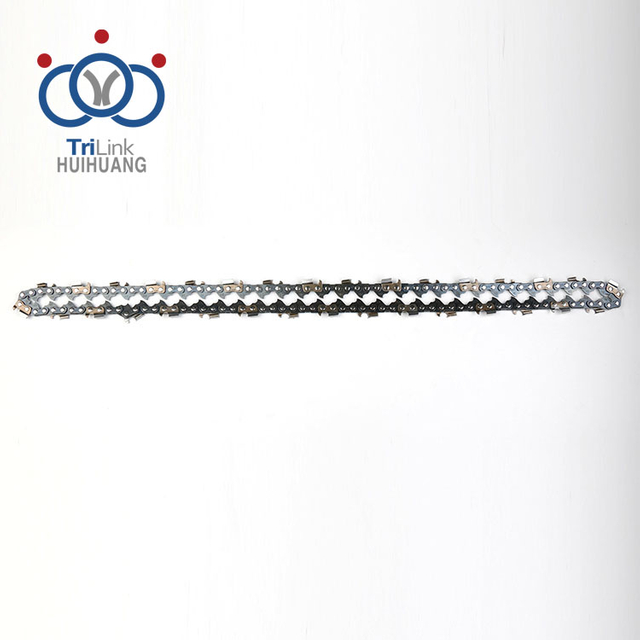
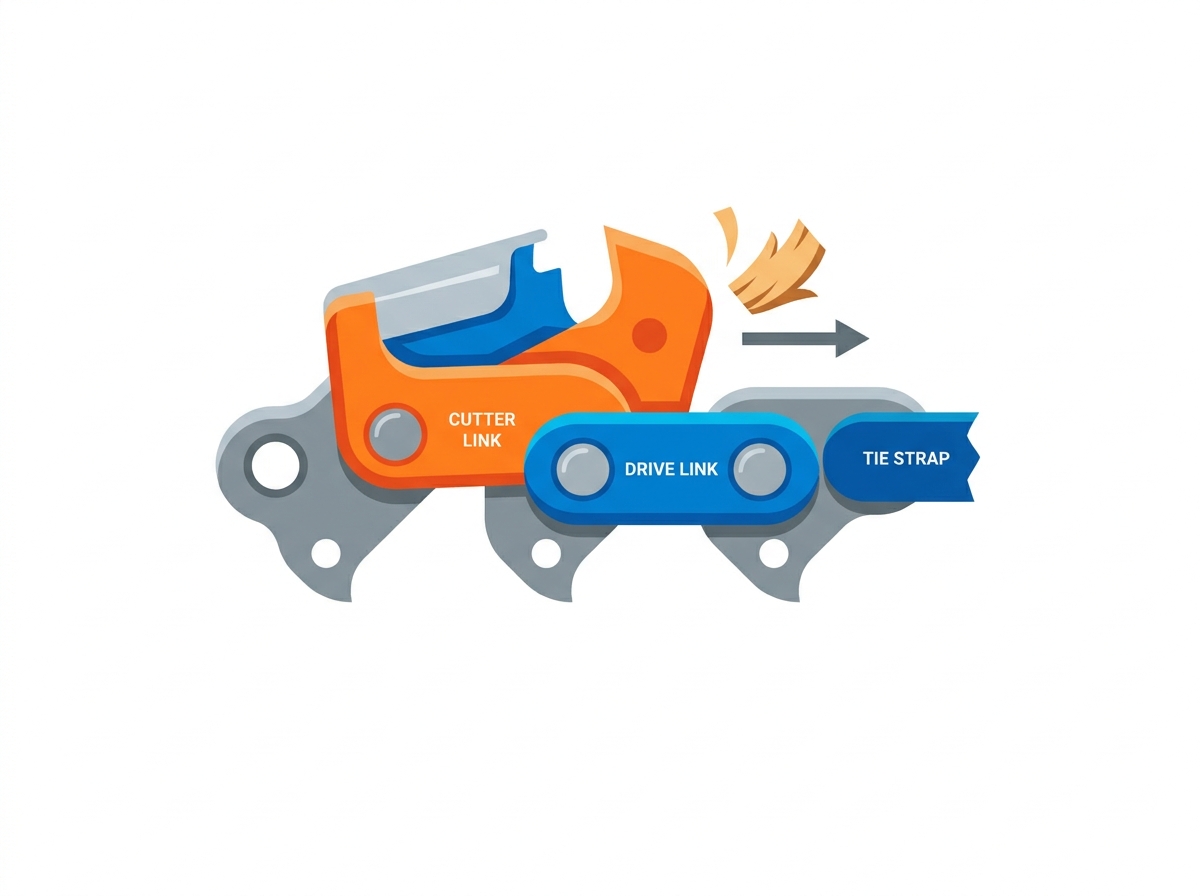
Anatomy Dictates Function: A chainsaw chain is a continuous loop of specialized components—cutters, drive links, and tie straps—working in unison to sever and route wood fibers.
The Chipper Tooth Principle: Chains do not saw; they chisel. The depth gauge regulates the bite, while the cutting corner, top plate, and side plate sever and lift the wood chip.
Profile Trade-Offs: Full-chisel chains offer maximum cutting speed in clean timber, whereas semi-chisel chains sacrifice raw speed for extended durability in dirty or abrasive conditions.
Strict Compatibility Metrics: Evaluating a replacement chain requires exact adherence to three non-negotiable metrics: pitch, gauge, and drive link count.
The Bar-Chassis Relationship: A clean, properly matched guide bar groove is just as critical as chain sharpness for ensuring straight, binding-free cuts.
Table of Contents
To evaluate a chain's condition or suitability, operators must first understand the structural integrity, physical geometry, and purpose of its individual parts. A chain is not a single blade but a complex assembly of distinct elements engineered to perform specific mechanical tasks. When you inspect a Chainsaw Chain, you are looking at a highly engineered cutting system.
The cutter is the primary working element of the chain. It acts as a miniature chisel, removing material with each pass. The top plate severs the bottom of the wood fiber, establishing the width of the cut. Simultaneously, the side plate severs the side of the wood fiber, separating the chip from the main body of the timber. Field operators know that a damaged top plate immediately reduces cutting efficiency by over fifty percent.
The intersection where the top and side plates meet is known as the cutting corner or working corner. This is the sharpest part of the tooth and initiates the cut. The cutter body rests on the chassis via the tooth base, divided into the heel and toe, which absorb and distribute physical impact during operation. Finally, the gullet—the curved space beneath the top plate—captures, curls, and clears the severed chip out of the cut. If the gullet is packed with resin or debris, the chip cannot clear, causing the saw to bog down.
Located directly ahead of the cutter, the depth gauge (historically referred to as a raker or drag) dictates how much wood the cutter can remove. The vertical distance between the top plate and the depth gauge is known as the depth gauge setting. This precise clearance determines the exact thickness of the wood chip removed. If this setting is incorrect, the cutter will either fail to engage the wood or bite too aggressively, leading to severe operational hazards. Many operators mistakenly file the depth gauges too low in an attempt to cut faster, which only results in violent vibrations and stalled engines.
Drive links are the lower components of the chain that engage directly with the drive sprocket. They propel the chain around the guide bar and help clear debris from the bar groove. The drive link tang must precisely match the guide bar's slot width to prevent instability during high-speed rotation. A worn drive link tang will cause the chain to jump or derail.
Tie straps serve as the connecting plates that join cutters and drive links together. They form a continuous, stable chassis that must withstand extreme tension and rotational forces without separating. Factory-spun rivets ensure these tie straps hold the assembly together under heavy load.
Rivets hold the entire assembly together. They endure high mechanical load and constant friction as the chain bends around the bar nose and drive sprocket. Rivet wear and bearing-surface degradation lead to chain stretch. When rivets wear down, the physical distance between links increases, causing instability, poor tension retention, and eventual chassis failure. Lubrication is the only defense against premature rivet wear.
Understanding how mechanical design translates into cutting efficiency, safety, and operator feedback requires examining the micro-mechanics of the cut. Chainsaws do not operate like traditional handsaws; they utilize the chipper tooth principle. You are essentially running dozens of tiny block planes across the wood surface at high speed.
As the cutter enters the wood, the working corner and side plate sever the fiber. The angled geometry of the top plate then lifts and routes the chip out of the kerf. The kerf is the physical channel or slot of wood material removed by the alternating left-hand and right-hand cutters. Efficient routing prevents the kerf from clogging, which would otherwise stall the powerhead and increase friction. Hardwoods require more power to sever the fiber, while softwoods produce larger chips that demand efficient routing.
The physics of depth gauge clearance directly control the aggressiveness of the cut. Depth gauges that are too high result in a chain that cannot bite the wood, forcing the operator to push heavily on the bar. Conversely, depth gauges filed too low result in aggressive biting. This causes extreme vibration, chain stalling, and a high risk of kickback as the cutter grabs more wood than the powerhead can pull through. Maintaining the factory depth gauge setting is non-negotiable for safe operation.
Visual inspection of the wood debris provides immediate feedback on chain health. A healthy, properly sharpened chain produces large, clean, uniform wood shavings that fall away from the guide bar. Fine sawdust is the primary diagnostic indicator of dull top plates, damaged cutting corners, or improper filing angles. When a saw produces dust instead of chips, the cutters are grinding the wood rather than severing it. This grinding generates massive amounts of heat, which will quickly ruin the guide bar rails.
Matching the chain's cutter profile to the operational environment, wood type, and user expertise is critical for maximizing productivity and minimizing downtime. Using the wrong profile for the job guarantees poor performance.
Full-chisel chains feature square-cornered teeth with a sharp 90-degree cutting corner. They offer maximum cutting speed and efficiency in clean, green softwood and hardwood. However, this aggressive profile comes with drawbacks. Full-chisel cutters suffer rapid dulling when exposed to dirt, mud, or abrasive bark. They also present a higher kickback risk and require precise sharpening techniques and exact file alignment to maintain their square geometry. Professional loggers working in clean timber prefer full chisel for its unmatched speed.
Semi-chisel chains utilize rounded-corner teeth. While they cut approximately 10-15% slower than full-chisel variants, they retain sharpness significantly longer when cutting dirty, frozen, or dry wood. The rounded working corner is highly forgiving during the manual sharpening process, making semi-chisel an excellent choice for land clearing, firewood processing, and environments where pristine timber cannot be guaranteed. If you are cutting near the ground or bucking skidded logs, semi-chisel is the correct choice.
Low-profile chains are designed for lightweight, consumer-grade saws and arborists. The reduced cutter height lowers overall chain weight and power requirements, allowing smaller engines to maintain high RPMs. Skip tooth or semi-skip chains feature fewer cutters, creating more space between teeth. These are evaluated for long guide bars (typically 24 inches or larger) to improve chip clearance and maintain powerhead RPMs in large timber by reducing the number of teeth engaged in the wood simultaneously.
Safe, functional, and reliable procurement requires strict adherence to technical specifications. Guesswork in chain selection leads to damaged equipment and severe safety hazards. You must match the chain to the saw and the bar perfectly.
Pitch is defined as the distance between any three consecutive rivets divided by two. It dictates the overall size and power requirements of the chain (common sizes include 1/4", .325", 3/8", and .404"). Gauge is the thickness of the drive link where it fits into the guide bar groove (common sizes include .050", .058", and .063").
Specification | Definition | Common Measurements | Impact on Operation |
|---|---|---|---|
Pitch | Distance between 3 rivets divided by 2 | 1/4", .325", 3/8", .404" | Determines chain size and sprocket compatibility. |
Gauge | Thickness of the drive link tang | .043", .050", .058", .063" | Ensures proper fit within the guide bar groove. |
Drive Link Count | Total number of drive links | Varies (e.g., 60, 72, 84) | Dictates the exact length of the continuous loop. |
Matching the exact gauge of the drive link to the guide bar groove prevents "slop," which is the tendency of the chain to lean sideways during a cut. A worn bar groove or mismatched gauge causes the chain to lean, leading to crooked, inefficient cuts and accelerated, uneven bar rail wear. The drive link must slide freely but stand perfectly vertical within the groove. If you can wiggle the chain side-to-side excessively while it sits in the bar, the bar is worn out or the gauge is wrong.
Measuring the physical bar length with a tape measure is inaccurate for purchasing a replacement chain. Guide bars of the same stated length can have different profiles and sprocket nose dimensions. To ensure exact sizing, operators must locate and use the drive link count (DL) stamped directly on the guide bar or count the drive links on the old chain.
Chains are categorized by their kickback potential. Standard chains (often designated with a Yellow label for professional use) lack aggressive anti-kickback features, allowing for specialized techniques like bore-cutting. Low-kickback chains (Green label for consumer use) incorporate mechanical additions such as bumper drive links and ramped depth gauges. These features physically prevent the cutting corner from grabbing too much wood as it rounds the upper quadrant of the bar nose, significantly reducing kickback risk at the cost of plunge-cutting capabilities.

Even the highest quality chain will fail if subjected to poor maintenance practices. Understanding operational trade-offs prevents premature wear and equipment damage. Routine maintenance is not optional; it is a strict requirement for safety and performance.
Chain tension requires constant monitoring. A loose chain derails easily, posing an extreme safety hazard to the operator. Conversely, an over-tightened chain burns the guide bar rails, stretches the chassis prematurely, and damages the powerhead crank bearings. Perform a "snap-test" on a cold chain: pull the chain down from the bottom of the bar and release it. The drive links should remain fully within the bar groove while allowing free movement around the bar by hand.
Follow these steps to properly tension your chain:
Loosen the bar nuts slightly so the guide bar can move up and down.
Lift the nose of the guide bar and hold it in the upward position.
Turn the tensioning screw until the drive links just touch the bottom rails of the bar.
Perform the snap-test to ensure smooth movement.
Tighten the bar nuts securely while continuing to hold the bar nose up.
Using the wrong round file diameter or altering the factory top-plate angle ruins the cutter geometry, destroying cutting performance. Utilizing file guides, matching the correct file diameter to the chain pitch, and strictly adhering to manufacturer-specified angles (typically 25-30 degrees) mitigates this risk. A few precise strokes with the correct file yield far better results than aggressive filing with improper tools. Always file from the inside of the cutter to the outside.
Friction destroys the temper of the steel. Operating without sufficient bar and chain oil causes the cutters to overheat, lose their hardened edge, and eventually fuse to the guide bar. Ensure the oil reservoir is filled every time the saw is refueled, and periodically check that the saw is throwing a light mist of oil against a clean surface before beginning heavy cuts. If the oiler fails, stop cutting immediately and clear the oil ports on the guide bar.
Keeping your chainsaw chain in the best condition starts with choosing the correct chain type, maintaining proper tension, and following recommended sharpening and lubrication practices. A well-matched and properly maintained chain delivers safer operation, cleaner cuts, and a longer service life.
Zhejiang TriLink Huihuang is a professional manufacturer specializing in chainsaw chains, guide bars, and forestry cutting solutions. With advanced production technology, strict quality control, and comprehensive OEM/ODM capabilities, the company provides high-quality products trusted by forestry professionals, distributors, and outdoor power equipment brands worldwide.
Verify your exact pitch, gauge, and drive link count before procuring any replacement chains.
Inspect your guide bar groove for excessive wear or uneven rails that could cause chain slop.
Maintain strict filing angles using a proper guide, and never neglect the depth gauge settings during routine sharpening.
Perform a cold tension check prior to every operational shift to prevent derailment and bearing damage.
A: Sharpening frequency depends on the cutting environment. In clean wood, a quick touch-up every time you refuel maintains peak efficiency. If you strike dirt, rocks, or metal, you must stop and sharpen immediately, as the cutting corners will be instantly compromised.
A: No. The pitch of the chain must perfectly match the pitch of the drive sprocket and the guide bar nose sprocket. Mixing pitches will severely damage the drive system and cause the chain to break or derail.
A: Crooked cuts are typically caused by uneven sharpening (cutters on one side are longer or sharper than the other), unevenly filed depth gauges, or worn guide bar rails that allow the chain to lean sideways in the groove.
A: Full chisel has a sharp, square cutting corner for maximum speed in clean wood but dulls quickly in dirt. Semi-chisel has a rounded corner, cutting slightly slower but maintaining its edge much longer in abrasive or dirty conditions.
A: Fine sawdust indicates that the cutters are dull, the cutting corners are damaged, or the depth gauges are set too high. A sharp, properly configured chain should pull large, uniform wood shavings.