
Views: 0 Author: Site Editor Publish Time: 2026-07-17 Origin: Site


Upgrading or replacing a Chainsaw Chain is the single most impactful variable for cutting efficiency. This component often outweighs the powerhead's specifications when determining how fast and smooth a saw will cut. Selecting an incorrect chain introduces severe operational risks. You face accelerated equipment wear, increased kickback hazards, poor fuel or battery efficiency, and excessive downtime for field sharpening. Operating with the wrong cutter geometry forces the powerhead to work harder, leading to premature failure.
Choosing the right chain requires evaluating three distinct technical dimensions: cutter geometry, chain sequence, and strict compatibility metrics. You must match the pitch and gauge to your specific guide bar and drive sprocket. Every cutting environment demands a different setup. Clean hardwood requires a different approach than sandy logs or storm cleanup. Understanding these technical variables ensures you maximize production speed while maintaining operator safety.
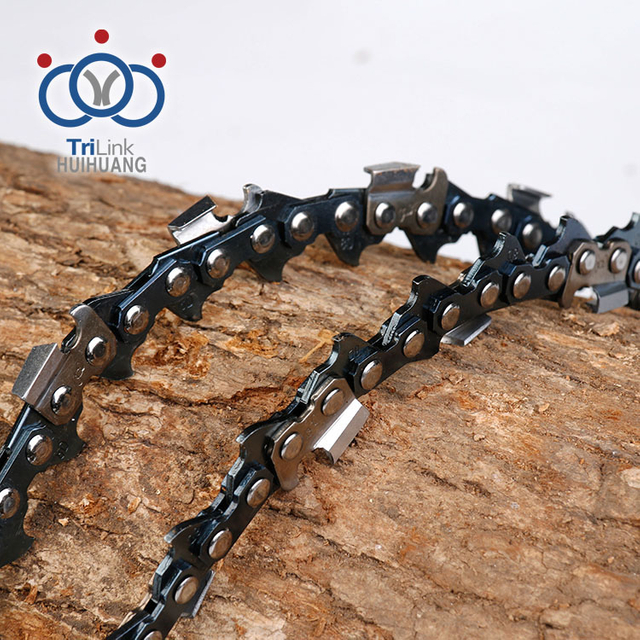
Cutter Geometry Dictates Application: Full chisel chains maximize cutting speed in clean timber, while semi-chisel and carbide-tipped chains prioritize edge retention in dirty or abrasive conditions.
Sequence Impacts Bar Length: Standard sequences suit shorter bars and smooth cuts; skip sequences reduce drag and improve chip clearance on bars over 24 inches.
Compatibility is Non-Negotiable: A chainsaw chain must exactly match the saw’s pitch, gauge, and drive link count—mismatched chains will cause catastrophic bar and sprocket failure.
ANSI Safety Standards (Green vs. Yellow): Low-kickback "green label" chains are mandatory for consumer safety, while highly aggressive "yellow label" professional chains demand specialized training.
Maintenance Realities: High-performance chains (like square-ground full chisel or carbide) require specialized sharpening equipment and advanced operator skill compared to standard round-file chains.
Table of Contents
Pitch represents the physical size of the chain. You calculate it by measuring the distance between any three consecutive rivets and dividing that number by two. Common pitch sizes include 1/4", .325", 3/8", and .404". The pitch determines the overall weight and aggressiveness of the chain. A larger pitch requires more engine power to pull through the wood. You must ensure the chain pitch exactly matches both the guide bar nose sprocket and the drive sprocket on the powerhead. Running a .325" chain on a 3/8" sprocket will instantly destroy the drive links and ruin the sprocket drum.
When working in the field, identifying pitch quickly saves downtime. Most professional saws in the 50cc to 70cc range run a 3/8" pitch, offering a solid balance of cutting speed and durability. Smaller ground saws and top-handle arborist saws typically utilize 1/4" or 3/8" Low Profile pitches to reduce weight and rotational mass. Heavy timber felling with saws exceeding 90cc often demands a .404" pitch to withstand the massive torque without snapping tie straps.
Gauge measures the thickness of the drive link that fits directly into the guide bar groove. Standard gauge measurements are .043", .050", .058", and .063". Precise matching is non-negotiable for lateral stability and proper oil distribution during operation. If you install a chain with a narrower gauge than the bar groove, the chain will lean side to side. Mismatched or worn bar grooves cause crooked cuts and accelerate drive link damage, eventually leading to chain derailment.
Conversely, forcing a .063" gauge chain into a .050" bar groove will cause immediate binding. The chain will not spin freely, and the friction will burn the bar rails within minutes. Always check the stamped numbers on the tail end of your guide bar before mounting a new chain. These numbers provide the exact gauge requirement for that specific bar.
Gauge Size | Common Application | Typical Saw Displacement |
|---|---|---|
.043" (1.1mm) | Battery-powered, small pole saws | Under 35cc / Battery |
.050" (1.3mm) | Standard homeowner, light professional | 35cc - 60cc |
.058" (1.5mm) | Mid-range professional (common in Europe) | 50cc - 70cc |
.063" (1.6mm) | Heavy-duty professional logging | 70cc+ |
Counting the drive links is the only accurate method for determining the correct chain length. Relying solely on the stated bar length often leads to purchasing the wrong size. Guide bars from different manufacturers with the same stated length can require a different number of drive links. For example, a 20-inch bar from one brand might take 72 drive links, while another brand's 20-inch bar requires 74.
Major brands like Stihl, Oregon, and Husqvarna stamp numeric codes directly on the drive links. You can use these manufacturer ID stamps as a quick reference to identify the exact pitch and gauge without measuring tools. If the stamp is worn off from heavy use, lay the old chain flat on a tailgate and count the drive links manually. Mark the starting link with a sharpie to avoid losing your place.
Modern chains incorporate specific safety features to mitigate operational hazards. Standard drive links offer maximum cutting aggression but increase the risk of rotational kickback. Bumper drive links feature an elongated profile that guides wood smoothly into the cutter, significantly reducing kickback energy. This design limits bore cutting capabilities but vastly improves safety for ground crews and occasional users.
Regulatory testing categorizes chains into two distinct groups. Green Label chains meet ANSI B175.1 low-kickback standards. These are mandatory for consumer safety and highly recommended for general property maintenance. Yellow Label chains pose a high-kickback risk. They lack bumper links and are designed strictly for professional users who possess specialized training in reactive forces and advanced felling techniques. Using a yellow label chain for brush clearing or limbing increases the likelihood of the bar nose catching a hidden branch and throwing the saw back at the operator.

Full chisel chains feature a square-cornered tooth design. This geometry severs wood fibers across the grain faster than any other style. It is the absolute standard for professional logging and clean hardwood felling. When you need to drop large timber quickly and the bark is free of mud, full chisel delivers unmatched production speed.
Round-ground full chisel chains use standard aggressive teeth sharpened with a round file, making field maintenance relatively straightforward. You can touch up the edge on the tailgate using a standard filing guide. Square-ground chisel, or true square chisel, requires a flat hex file or a specialized grinder. This sub-type offers the absolute fastest-cutting geometry available and remains the preferred choice for professional West Coast timber cutters working in massive softwoods.
The primary trade-off is durability. Full chisel teeth rapidly lose their sharp edge when contacting dirt, rocks, or frozen wood. The square corner is highly fragile and prone to chipping. If you graze the dirt with a full chisel chain, you will immediately notice a massive drop in cutting performance. Additionally, this aggressive profile presents a significantly higher risk of kickback compared to rounded designs.
Semi-chisel chains utilize a rounded-corner tooth design. This structural change provides a highly balanced performance profile. Arborists, firewood cutters, and agricultural users prefer this style when dealing with dirty wood, stumps, or mixed environmental conditions. The rounded corner deflects abrasive particles rather than chipping, allowing the tooth to retain a working edge much longer than a full chisel design.
Micro-chisel or chamfer chisel designs represent a hybrid style. They feature a small 45-degree chamfer rather than a full radius curve. This offers a middle ground, providing faster cutting speeds than traditional semi-chisel while maintaining excellent durability against abrasives. These hybrid chains are excellent for storm cleanup where wood is often dragged through mud and gravel.
Users experience a roughly 10-15% reduction in cutting speed compared to full chisel chains. However, this slight drop in efficiency is heavily offset by significantly longer intervals between sharpening sessions. When cutting firewood from skidded logs, a semi-chisel chain will often last a full day of cutting, whereas a full chisel chain might require filing every two hours.
Chipper chains feature a fully rounded, heavy-duty cutter design. While largely considered a legacy style, they still see use in specific heavy-duty applications. The continuous curve of the tooth provides extreme durability in highly abrasive environments. You will occasionally see these on older gear-drive saws or specialized trenching equipment.
Beginners find chipper chains exceptionally easy to sharpen because the round file fits naturally into the cutter profile without requiring precise angle control. The main drawbacks include very slow cutting speeds and heavy vibration during operation. Modern semi-chisel designs have largely replaced chipper chains for contemporary saws, offering better speed with comparable durability.
Low profile chains, typically designated as 3/8" Low Pro or Picco, feature a shallower cutter height and integrated safety elements like bumper links. Manufacturers design these specifically for consumer-grade, electric, battery-powered, and top-handle arborist saws. The reduced cutter height requires less power to pull through the kerf, making them ideal for saws under 40cc.
The reduced mass lowers the overall weight of the cutting attachment and minimizes kickback potential. The trade-offs include limitations in aggressive cutting and a shallower depth of cut per tooth pass. These chains are entirely unsuitable for high-displacement powerheads. Putting a low-profile chain on a 70cc saw will result in snapped tie straps and a high risk of the chain whipping back at the operator.

A standard sequence features one cutter for every two drive links. This is the most common configuration on the market. It is best suited for guide bars under 24 inches in length. The high density of cutter teeth ensures maximum contact with the wood fibers at all times.
This sequence produces the smoothest cut with the least amount of vibration. It is ideal for limbing, bucking small timber, and general homeowner use where finish quality and smooth operation are priorities. Because there are more teeth doing the work, each individual tooth takes less of a beating, resulting in a very stable cutting experience.
A semi-skip sequence alternates between one and two tie straps between cutters. This configuration is best for mid-range bars spanning 24 to 32 inches. It provides a necessary balance between smooth cutting and effective chip clearance. When burying a 28-inch bar in a large oak, a standard sequence chain can clog the kerf with chips, causing the saw to bog down.
Professionals use semi-skip when they need better chip flow in larger wood without fully sacrificing the cutting smoothness of a standard sequence. It reduces the drag on the powerhead just enough to maintain optimal RPMs during medium-to-large felling operations. It also means fewer teeth to sharpen at the end of the day compared to a standard sequence.
A full skip sequence places two tie straps between every cutter, effectively halving the number of teeth compared to a standard chain. This setup is mandatory for long guide bars exceeding 32 inches and large-diameter felling. When cutting massive West Coast timber, chip clearance becomes the primary bottleneck for cutting speed.
Fewer teeth significantly reduce drag on the powerhead. This allows the saw to maintain high RPMs in deep, demanding cuts. Furthermore, the increased distance between cutters provides maximum physical space for clearing large wood chips out of the kerf, preventing the saw from bogging down. The trade-off is increased vibration and a rougher cut, making full skip chains unsuitable for small limbing tasks.
Chain Sequence | Cutter Spacing | Recommended Bar Length | Primary Benefit |
|---|---|---|---|
Standard | 1 cutter per 2 drive links | Up to 24 inches | Smoothest cut, low vibration |
Semi-Skip | Alternating 1 and 2 tie straps | 24 to 32 inches | Balanced chip clearance and smoothness |
Full Skip | 2 tie straps between cutters | 32+ inches | Maximum chip clearance, high RPMs in deep cuts |
Ripping chains are engineered specifically for chainsaw milling operations, such as Alaskan mills, where the operator cuts parallel to the wood grain. Standard chains cut across the grain, which produces rough, aggressive chunks when used for milling. Using a standard crosscut chain for milling will result in deeply scored lumber that requires hours of planing to fix.
The technical distinction lies in the modified sharpening angle. Ripping chains typically utilize a 10-degree top plate angle instead of the standard 25-35 degrees. This shallow angle creates fine shavings rather than large chips, resulting in a much smoother board finish and less strain on the mill setup. Some ripping chains also feature a scoring cutter followed by a clearing cutter to further refine the surface finish of the milled slab.
Carbide-tipped chains serve extreme environments like fire rescue, demolition, and cutting heavily embedded or dirty wood. They easily handle railroad ties, root wads, sandy logs, and light sheet metal. When cutting through a roof during ventilation operations, firefighters rely on carbide chains to chew through asphalt shingles and nails without instantly dulling.
These chains feature brazed tungsten carbide inserts on the cutter teeth. While they stay sharp exponentially longer in abrasive conditions, they carry significant implementation risks. The carbide is highly brittle and prone to fracturing upon hard steel impacts. They are expensive to replace and require a dedicated diamond grinding wheel for sharpening, making field maintenance impossible. If you hit a hardened steel bolt, you will likely shatter several carbide teeth, ruining a very expensive chain.
Assess the timber condition. If the wood is clean and free of mud, select a full chisel chain for maximum speed. If the wood is skidded, dirty, or frozen, default to a semi-chisel chain for edge retention.
Determine your guide bar length. For bars under 24 inches, use a standard sequence. For bars 24 to 32 inches, choose semi-skip. For bars over 32 inches, mandate a full skip sequence to ensure proper chip clearance.
Verify powerhead displacement. Saws under 40cc should run low-profile chains. Saws between 50cc and 70cc handle standard 3/8" pitch well. Saws over 90cc pulling long bars may require .404" pitch for structural integrity.
Identify specialized tasks. If you are milling lumber, you must install a ripping chain. If you are performing demolition work or cutting railroad ties, invest in a carbide-tipped chain.
Evaluate operator skill level. Novice users and homeowners should strictly use green-label, low-kickback chains with bumper drive links. Only trained professionals should operate yellow-label, full-chisel chains.
Failing to monitor sprocket wear destroys new equipment. You must replace the drive sprocket after every two to three chains. A worn sprocket develops grooves that will immediately chew up the drive links of a brand-new chain, rendering it useless. Inspect the rim sprocket for deep wear patterns every time you swap a chain. If the wear exceeds 0.5mm in depth, discard the sprocket.
Drive link damage often stems from poor bar rail maintenance. Burrs on the guide bar rails or worn bar entry zones pinch and damage the drive links. This leads to severe binding in the cut. You must dress the bar rails flat and remove burrs regularly using a flat file. Check the bar groove depth as well; if the drive link bottoms out in the groove, the bar is worn out and must be replaced.
Lubrication failures cause rapid thermal expansion and chain stretch. Different chain chassis designs manage oil differently, but all rely on clean drive link oil holes. Inspect and clean these holes during every sharpening to ensure oil reaches the rivets. A dry chain will stretch beyond the tensioner's limits within a single tank of fuel and will eventually snap under load.
Sharpening realities dictate your field efficiency. Round-ground chains allow for quick hand-filing on the tailgate. You only need a round file, a file guide, and a stump vise. Square-ground full chisel demands specialized files and high operator skill to maintain the correct geometry. Carbide chains completely eliminate field sharpening, requiring a return to the shop for diamond wheel grinding. Always carry at least two spare chains to avoid stopping work for field sharpening.
Every new chain requires a break-in period. Different types and sequences stretch at varying rates during the first few cuts. You must monitor tension vigilantly during the first tank of fuel to prevent derailment and drive link damage. Run the saw at half throttle for a few minutes, let the chain cool, and re-tension it before making heavy felling cuts.
Selecting the right chainsaw chain is the key to achieving better cutting performance, improved safety, and longer equipment life. By matching the correct cutter style, chain sequence, pitch, and gauge to your application, you can maximize productivity while reducing wear and maintenance costs.
Zhejiang TriLink Huihuang is a professional manufacturer specializing in chainsaw chains, guide bars, and forestry cutting solutions. Backed by advanced manufacturing equipment, strict quality control, and extensive OEM/ODM experience, the company provides high-performance products trusted by forestry professionals, distributors, and outdoor power equipment brands worldwide.
Consult your chainsaw’s guide bar stamping to verify the exact pitch, gauge, and drive link count before purchasing any replacement chain.
Assess your primary cutting environment to determine if you require the aggressive speed of a full chisel chain or the rugged durability of a semi-chisel chain.
Select the appropriate chain sequence based strictly on your guide bar length to optimize chip clearance and maintain engine RPMs in the cut.
Invest in the correct sharpening files, depth gauge tools, or grinders that match your chosen cutter geometry to maintain peak operational efficiency in the field.
A: No. The chain must exactly match the pitch, gauge, and drive link count specified by the guide bar and drive sprocket. Using mismatched components will cause severe damage to the saw and pose a major safety hazard to the operator.
A: Green label chains meet ANSI low-kickback standards and utilize bumper drive links for consumer safety. Yellow label chains lack these safety features, offering higher cutting aggression but posing a high kickback risk, making them suitable only for trained professionals.
A: A dull chain produces fine sawdust instead of large, distinct wood chips. You will also notice the saw requires physical force to push through the wood, rather than self-feeding, and it may produce a burning wood smell during operation.
A: Crooked cutting usually results from unevenly sharpened cutter teeth, where one side is longer or filed at a different angle than the other. It can also be caused by worn guide bar rails that allow the chain to lean.
A: A properly tensioned chain should fit snugly against the bottom of the guide bar but still pull freely by hand. When you pull down on the chain, the drive links should not completely leave the bar groove.
A: While physically possible, it is highly inefficient. Ripping chains are filed at a shallow angle to cut parallel to the grain for milling. Crosscutting firewood with a ripping chain will be exceptionally slow compared to a standard crosscut chain.