
Views: 0 Author: Site Editor Publish Time: 2026-08-21 Origin: Site


Buying the wrong replacement chainsaw chain carries severe mechanical and financial risks. A mismatched chain will rapidly ruin your guide bar, destroy the drive sprocket, and create immediate safety hazards for the operator. Many users rely solely on "bar length" when purchasing a replacement. This is a dangerous misconception. A 20-inch bar from one brand often requires a completely different chain than a 20-inch bar from another.
Proprietary manufacturer numbering systems add to this confusion. Overlapping measurements make the selection process frustrating. You need a systematic approach to bypass the guesswork. Decoding chainsaw chain terminology empowers you to match exact mechanical specifications. You must align Pitch, Gauge, and Drive Links perfectly. Once the non-negotiables are set, you can optimize performance variables like Cutter Type and Sequence to tailor the saw for specific operational workloads.
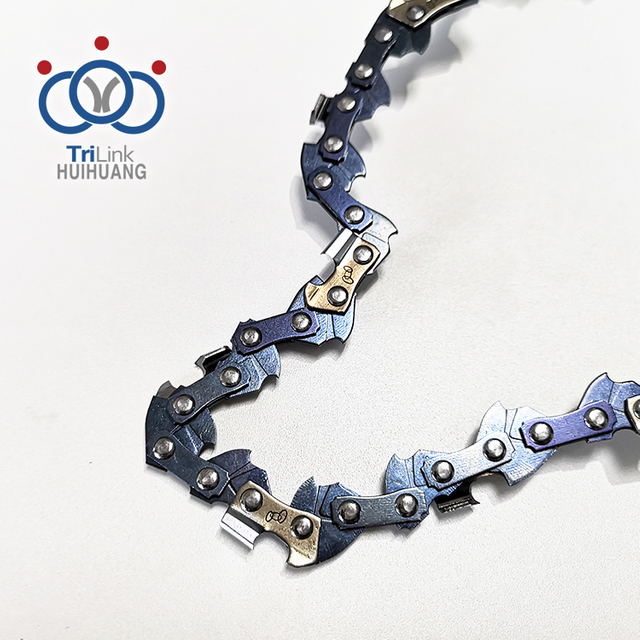
Non-Negotiable Compatibility: Pitch, Gauge, and Drive Link (DL) count must perfectly match the saw's guide bar, drive sprocket, and sprocket nose tip; failure to match these results in immediate operational failure.
Application-Specific Performance: Cutter types (Full-Chisel vs. Semi-Chisel) dictate cutting speed and durability, requiring a trade-off between clean-wood efficiency and dirty-wood resilience.
Safety Categorizations: Chains are strictly categorized by ANSI standards into low-kickback (consumer/green) and professional (yellow) classifications, impacting both liability and operator safety.
Verification Over Guesswork: The most reliable method for chain replacement is reading the stamped alphanumeric codes directly on the base of the guide bar, cross-referencing brand-specific drive link codes, or using precise measurement tools when stamps are illegible.
Table of Contents
Standardizing chain terminology solves cross-brand compatibility issues. You might want to run an aftermarket Oregon chain on a Stihl MS462 or a Husqvarna 572XP. Without a universal language, you cannot make that swap. Manufacturers use proprietary codes that obscure the actual physical dimensions of the chain. Understanding the underlying measurements allows you to source parts from any manufacturer confidently.
A saw chain consists of several distinct physical components. Cutters are the sharpened teeth that slice through the wood fibers. Depth gauges, often called rakers, sit in front of each cutter. They control the exact bite size the cutter takes. Drive links are the lower sections of the chain that ride inside the guide bar groove. They pull the chain around the bar and distribute lubricating oil. Tie straps connect the drive links and cutters. Rivets act as the permanent pivot points holding the entire assembly together.
You must follow the "Big Three" rule when selecting a chain. Pitch, Gauge, and Drive Link count are fixed constraints. You cannot alter them without replacing the guide bar and the drive sprocket. Cutter Type and Sequence are variable choices. You select these based on your environment, wood type, and personal preference.
Pitch defines the physical size of the chain. It is measured mechanically by finding the distance between any three consecutive rivets. You then divide that distance by two. This fraction represents the pitch. This measurement dictates the weight, the overall profile, and the spacing of the drive links. The pitch of the chain must mesh perfectly with the teeth on the drive sprocket. It must also align with the sprocket nose tip on the guide bar. If you run a .325" chain on a 3/8" sprocket, the drive links will not seat.
1/4" & 3/8" Low Profile (Picco): These are designed for lightweight applications. You will find them on battery-powered saws, pole pruners, and top-handle arbor saws like the Stihl MS 194 T. They require less engine power to pull through the wood and leave a very smooth finish.
.325": This pitch dominates the mid-range market. It is standard on professional and farm/ranch saws ranging from 38cc to 60cc. Saws like the Husqvarna 450 Rancher use this pitch. It offers a fast cut with moderate weight, balancing speed and engine load.
3/8" Standard: This is the go-to size for high-power professional felling saws. Saws in the 60cc to 100cc range use this pitch to handle heavy timber and long guide bars. If you are running a 28-inch bar on a 70cc powerhead, you are almost certainly using a standard 3/8" pitch.
.404": This is a highly specialized, heavy-duty pitch. It is used in extreme high-torque applications. You will see it on mechanized harvesters and massive felling saws cutting old-growth timber. The sheer size of the cutters requires massive horsepower to maintain RPM in the cut.
Mismatched pitch causes immediate mechanical failure. If you put a .325" chain on a 3/8" sprocket, the drive links will not seat properly. The chain will fail to mesh with the guide bar's sprocket nose tip. This leads to immediate binding. The chain will chew the drive sprocket to pieces. It can also snap under tension, creating a catastrophic safety hazard for the operator. Always verify the pitch stamped on the bar before mounting a new loop.
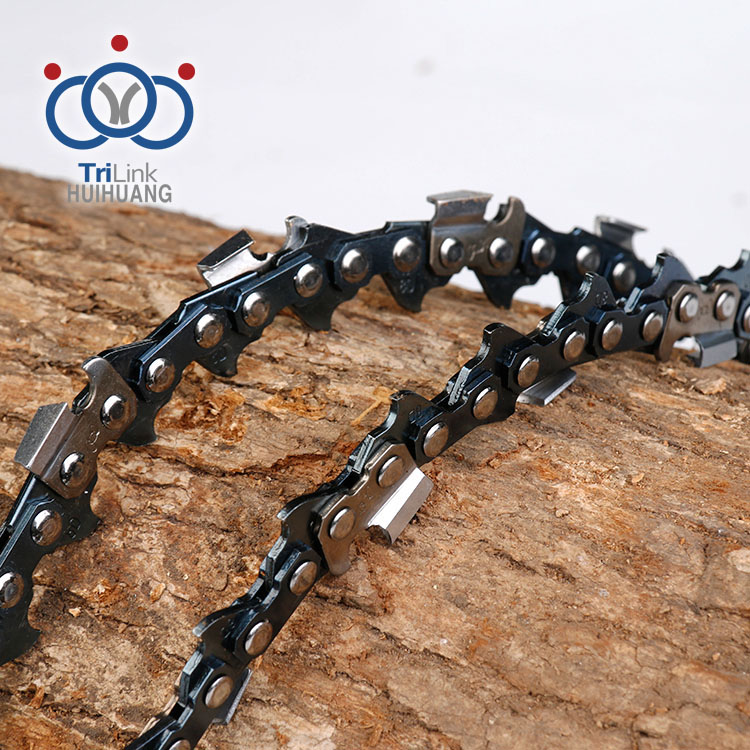
Gauge refers to the exact thickness of the drive link. Specifically, it is the thickness of the lower portion that inserts directly into the guide bar groove. This requires tight tolerance. The drive link must fit snugly to maintain stabilization during operation. It must also leave just enough microscopic clearance to pull bar oil around the track for proper lubrication. Too tight, and the chain binds. Too loose, and the chain leans in the cut.
There are four primary gauge standards used across the industry. Selecting the wrong one will either prevent the chain from fitting or cause it to derail.
Gauge (Inches) | Gauge (Millimeters) | Primary Application | Common Saw Types | Field Notes |
|---|---|---|---|---|
.043" | 1.1 mm | Narrow Kerf | Battery, Pole Pruners | Requires very little power. Prone to stretching if pushed hard. |
.050" | 1.3 mm | Standard / Universal | Consumer, Light Farm | The most widely available gauge globally. Easy to find replacements. |
.058" | 1.5 mm | Professional Heavy | Mid-range Pro Saws | Favored by Husqvarna. Offers a stiffer drive link for better stability. |
.063" | 1.6 mm | Extreme Heavy Duty | Large Felling Saws | Standard on large Stihl saws. Resists stretching under heavy torque. |
Gauge wear dictates bar lifespan. Over time, the steel rails of the guide bar wear down. The groove becomes wider. A worn bar groove can make a brand-new, correct-gauge chain feel loose. This slop causes the chain to lean during a cut, resulting in curved or uneven slices. It also increases the risk of derailing, commonly known as "throwing a chain."
You can perform a quick field test to check for bar wear. Place a straight edge against the side of the bar and the cutting tooth. If there is a gap, the gauge is still tight enough to hold the tooth upright. If the straight edge sits flush against both the bar and the tooth, the groove is worn out. The chain is leaning over. At this point, buying a new chain will not fix the problem. You must replace the guide bar. If the bar stamp has worn off, you can measure the gauge of your old chain using digital calipers. Measure the thickness of the drive link lug directly. Do not measure the tie straps or the cutters.
The concept of a "20-inch chain" is a persistent myth. Bar length only describes the approximate cutting area extending from the saw body. It does not dictate the total loop length of the chain. Different manufacturers use different bar profiles. The radius of the sprocket nose varies. The distance from the mounting pad to the tip varies. Two 20-inch bars can easily require different link counts to achieve proper tension. A 20-inch Stihl bar might take 72 drive links, while a 20-inch Husqvarna bar might take 78.
You must rely on the Drive Link (DL) count. This is a foolproof method for determining size. Remove the chain from the saw. Lay it flat on a workbench. Count the inner drive lugs that point inward. Do not count the cutting teeth. Count the drive links one by one. When you lay the chain out on the workbench, pull it taut to form a long oval. Start at one end and count down one side, then up the other. This prevents losing your place. I recommend marking the first link with a Sharpie so you know when you have completed the loop.
If you are buying a chain off a bulk reel, the dealer will use a breaker and spinner tool to cut the exact number of drive links you specify. This is why knowing your DL count is far more valuable than knowing your bar length. Alternatively, check the bar stamp. The DL count is typically explicitly listed on the tail of the guide bar near the mounting slot. You will see a stamp like "72 DL" or just "72."
Full-chisel cutters feature sharp, square-cornered teeth. They are engineered for maximum cutting speed. The square corner severs wood fibers aggressively. They deliver exceptional performance in clean, green wood. Professional fallers rely on full-chisel chains to maximize daily production. However, they come with severe trade-offs. The sharp corner dulls rapidly if exposed to dirt, sand, or frozen wood. Hitting a single rock can instantly ruin the cutting edge. They also carry a higher kickback risk due to their aggressive bite profile.
Semi-chisel cutters utilize rounded-corner teeth. They cut slightly slower than full-chisel chains. However, they offer significantly higher durability and edge retention. The rounded corner deflects debris rather than absorbing the impact directly. This makes them ideal for dirty wood, stump work, and dry timber. They require much less frequent field sharpening, making them a favorite for property maintenance and firewood cutting. If you are skidding logs through the mud, semi-chisel is the only practical choice.
These cutters represent a hybrid approach. Micro-chisel features very small radius corners. Chamfer-chisel uses dual 45-degree chamfers instead of a true radius. They offer a balance between the raw speed of full-chisel and the resilience of semi-chisel. They are highly forgiving. You can maintain them easily with standard round files in the field. Many mid-range consumer saws ship with chamfer-chisel chains straight from the factory.

Chipper cutters feature a fully rounded, legacy design. The entire working corner is a continuous curve. They are extremely durable. They handle heavy debris and agricultural clearing better than any modern design. However, they cut slowly. They are rarely used in modern precision felling, though they remain popular for specialized dirty-work applications like cutting railroad ties or heavily embedded roots.
Cutter Type | Corner Profile | Best Application | Durability in Dirty Wood |
|---|---|---|---|
Full-Chisel | Square | Clean, green timber felling | Very Low |
Semi-Chisel | Rounded | Firewood, dirty logs, stump work | High |
Chamfer-Chisel | 45-Degree Bevel | General property maintenance | Moderate |
Chipper | Fully Continuous Curve | Extreme debris, root cutting | Very High |
Chain sequence determines how many cutters are on the loop and how they are spaced. This impacts engine load and chip clearance.
Standard Sequence: Features a cutter on every other link. This provides the smoothest cut. It is best for shorter bars under 24 inches where engine power can easily pull the full complement of teeth.
Semi-Skip Sequence: Alternates between one and two tie straps between cutters. It reduces the total number of teeth. This is a compromise for mid-length bars.
Full-Skip Sequence: Features two tie straps between every cutter. It significantly reduces the number of cutting teeth on the loop.
Skip chains require less engine power to pull through long cuts. They are ideal for bars over 24 inches buried in large logs. Fewer teeth mean fewer wood fibers are engaged simultaneously. They also clear wood chips faster, preventing the cut from clogging. The trade-off is that skip chains produce a rougher cut and generate higher vibration at the handles. You will feel the saw chatter more when starting a cut.
Major manufacturers stamp proprietary numbers directly on their drive links. These numbers act as shorthand for Pitch and Gauge. Mastering chainsaw chain terminology allows you to translate these codes to understand the universal measurements of your chain. If you walk into a saw shop and ask for a "Stihl 33," the mechanic knows exactly what you need. But if you try to buy an aftermarket chain online, you need to know the actual dimensions.
Oregon uses a highly standardized numbering system. The number stamped on the drive link tells you the pitch and gauge instantly. A "72" stamp indicates a 3/8" pitch and a .050" gauge. A "73" indicates 3/8" pitch and .058" gauge. A "20" stamp indicates a .325" pitch and a .050" gauge. Knowing these codes allows you to buy aftermarket replacements with confidence.
Stihl and Husqvarna use their own naming conventions. Stihl designates their chains with names like Rapid Super (RS) for full-chisel or Rapid Micro (RM) for semi-chisel. They also stamp numbers on the drive links. A Stihl "33" drive link translates to .325" pitch and .050" gauge. Husqvarna uses the X-Cut naming system. You must cross-reference these proprietary codes back to universal pitch and gauge measurements to ensure aftermarket compatibility.
Brand Code | Pitch | Gauge | Equivalent Oregon Code |
|---|---|---|---|
Stihl 33 | .325" | .050" | 20 |
Stihl 36 | 3/8" | .050" | 72 |
Husqvarna H46 | 3/8" | .050" | 72 |
Husqvarna H80 | 3/8" | .058" | 73 |
Chainsaw chains are strictly regulated by safety standards. Understanding these labels is mandatory for operator safety and liability.
Green label chains comply with ANSI B175.1 standards for low kickback performance. They include specific mechanical features to reduce danger. Bumper drive links sit between the cutters. Ramped depth gauges prevent the cutter from taking too deep of a bite as it travels around the bar nose. Kickback occurs when the upper quadrant of the bar nose contacts a solid object. The chain catches, and the rotational force throws the saw violently back toward the operator. Green label chains mitigate this by limiting how much wood the cutter can grab as it rounds that specific upper quadrant. These are mandatory for consumer saws and highly recommended for casual users. They cut slightly slower but drastically reduce the chance of a hospital visit.
Yellow label chains lack these kickback-reduction features. The absence of bumpers allows the chain to cut faster and plunge directly into the wood. Professional fallers need to use that upper quadrant for bore cutting—plunging the tip of the bar directly into the center of a tree to set up a hinge. That is why yellow label chains exist. They remove the safety bumpers to allow plunge cuts. However, the kickback risk is severe. These chains carry significant liability and safety risks for untrained operators. They should only be used by experienced professionals wearing full personal protective equipment. Never put a yellow label chain on a saw used by an inexperienced operator.
Find the stamped numbers on the tail of the guide bar. This area is near the mounting studs. You will usually find the Pitch, Gauge, and DL clearly engraved in the steel. This is your primary source of truth.
If the stamp is illegible due to wear or sap, do not guess. Read the proprietary code stamped on the drive links of your old chain. Cross-reference that number online. Alternatively, use a physical chain pitch and gauge measurement tool. If you lack tools, consult a local dealer or parts manager to measure it for you.
Pitch, Gauge, and DL cannot be altered. If your bar requires a 3/8" pitch, .050" gauge, and 72 drive links, you must buy exactly that. Any deviation requires replacing the bar and sprocket entirely.
Match the cutter type to your primary environment. If you are cutting clean, felled firewood, choose a full-chisel chain for speed. If you are doing dirty land clearing, cutting near the ground, or handling dry timber, select a semi-chisel chain for durability.
Ensure you select the appropriate ANSI classification. If you are a homeowner or casual user, insist on a green-label, low-kickback chain. If you are a professional requiring bore-cutting capabilities, select a yellow-label chain.
Clean your guide bar tail with a wire brush and solvent to reveal the stamped specifications clearly before ordering parts.
Count your drive links manually on a flat workbench to verify the exact loop length required for your specific saw setup.
Assess your primary cutting environment to determine if a full-chisel or semi-chisel cutter best suits your daily workload.
Check the drive link stamps on your current chain to cross-reference brand-specific codes before purchasing aftermarket replacements.
For users and businesses looking for dependable saw chain solutions across different cutting applications, Zhejiang TriLink Huihuang Co. LTD provides saw chain products designed to meet a variety of equipment and operating requirements. With experience in saw chain manufacturing and a focus on product performance, compatibility, and practical cutting needs, the company supports customers in selecting reliable chain solutions for efficient and consistent cutting operations.
A: No. The pitch must perfectly match the drive sprocket and the guide bar tip. Using a mismatched pitch will cause the chain to bind, potentially destroying the sprocket and creating a severe safety hazard.
A: If the gauge is too thick, the chain will not fit into the bar groove. If it is too thin, the chain will fit loosely, leading to poor lubrication, erratic cutting, and a high risk of the chain derailing during operation.
A: No. Bar length is an approximate measurement of the cutting area. To find the correct chain size, you must know the exact Drive Link (DL) count, pitch, and gauge, which are specific to the bar's profile and sprocket nose.
A: Choose a full-chisel chain for maximum cutting speed in clean, green wood. Opt for a semi-chisel chain if you are cutting dirty, dry, or frozen wood, as it holds its edge longer and requires less frequent sharpening.
A: The numbers stamped on the drive links are proprietary manufacturer codes. They act as a shorthand reference for the chain's pitch and gauge. You must cross-reference these codes with the manufacturer's chart to determine the universal measurements.
A: While it may physically fit if the pitch and gauge match, it is highly dangerous. Yellow-label chains lack kickback protection. Untrained operators should never use them due to the severe risk of injury.