Views: 0 Author: Site Editor Publish Time: 2024-02-01 Origin: Site


Choosing between a semi chisel and full chisel chainsaw chain depends on your cutting conditions, wood type, and maintenance preferences. Although both chains are designed for effective wood cutting, their cutter shapes affect cutting speed, edge retention, and overall performance.
The main difference is simple: full chisel chains are generally faster in clean wood, while semi chisel chains tend to maintain their cutting edges better in dirty or abrasive conditions.
For professional loggers, forestry workers, and chainsaw owners, understanding these differences can help you choose the right chain for each cutting task.
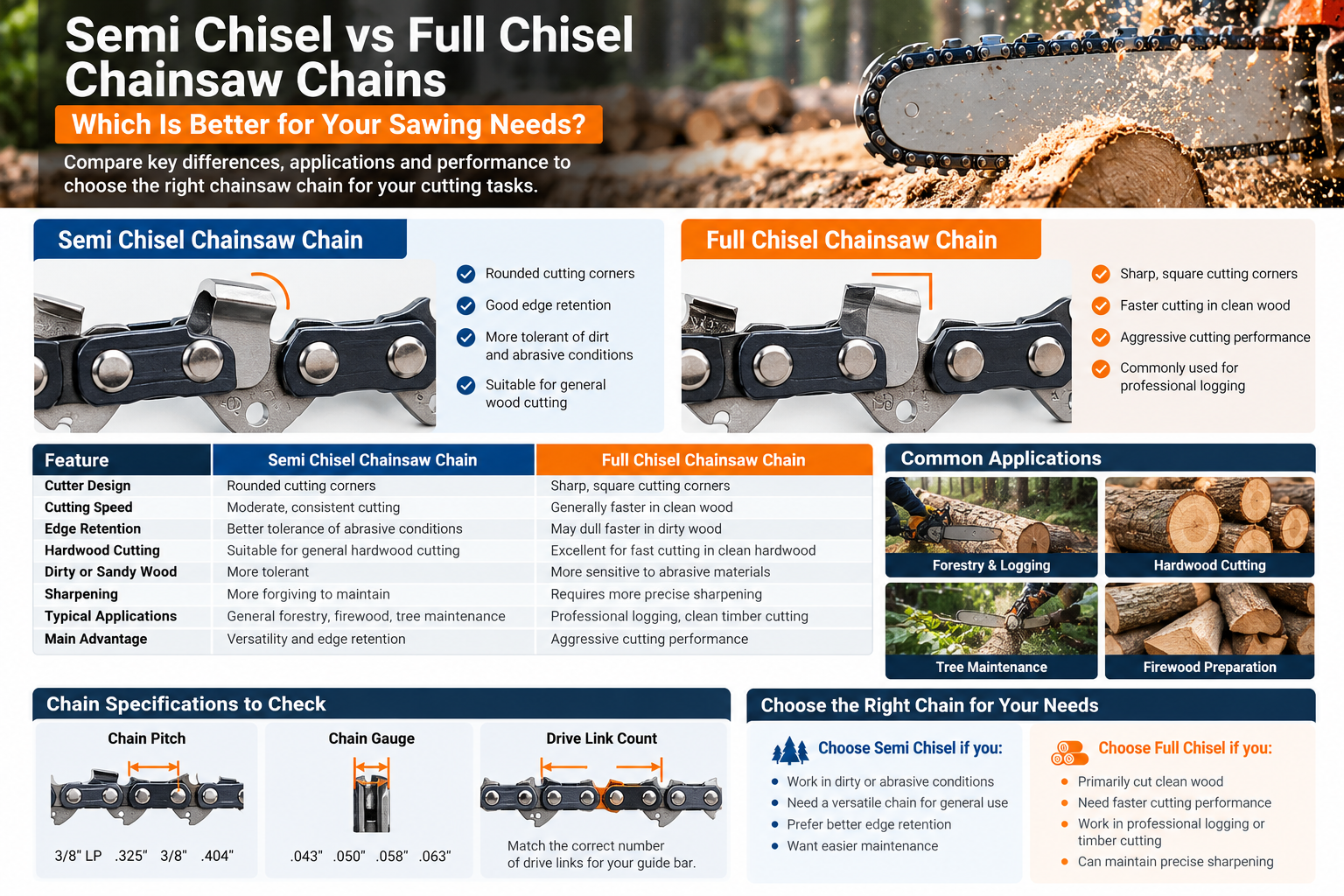
Before exploring their individual features, here's how the two chainsaw chain types compare.
| Feature | Semi Chisel Chainsaw Chain | Full Chisel Chainsaw Chain |
|---|---|---|
| Cutter Design | Rounded cutting corners | Sharp, square cutting corners |
| Cutting Speed | Moderate, consistent cutting | Generally faster in clean wood |
| Edge Retention | Better tolerance of abrasive conditions | May dull faster in dirty wood |
| Hardwood Cutting | Suitable for general hardwood cutting | Excellent for fast cutting in clean hardwood |
| Dirty or Sandy Wood | Generally more tolerant | More sensitive to abrasive materials |
| Sharpening | More forgiving to maintain | Requires more precise sharpening |
| Typical Applications | General forestry, firewood cutting, mixed conditions | Professional logging, clean timber cutting |
| Main Advantage | Versatility and edge retention | Aggressive cutting performance |
Both chain types can deliver reliable performance when properly sharpened, maintained, and matched to the chainsaw.
A semi chisel chainsaw chain features cutters with rounded corners between the top plate and side plate. This design provides a balance of cutting efficiency, durability, and edge retention.
Semi chisel chains are commonly used for general forestry work, firewood preparation, tree maintenance, and cutting wood that may contain dirt or other abrasive particles.
Better edge retention in dirty conditions: Rounded cutting corners are generally more tolerant of abrasive wood surfaces.
Versatile cutting performance: Suitable for hardwood, softwood, and general-purpose cutting.
More forgiving maintenance: The cutter profile can be easier to maintain consistently during routine sharpening.
Suitable for varied working environments: Useful when cutting conditions change throughout the day.
However, semi chisel chains generally cut less aggressively than full chisel chains in clean wood.
For users who prioritize consistent performance and practical maintenance, semi chisel chains can be an effective choice.
Explore our Saw Chain Products to find available cutter styles and chain specifications.
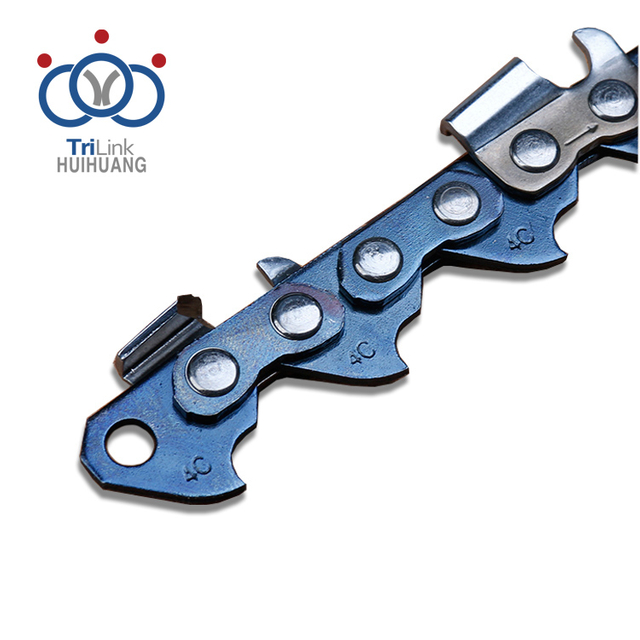
A full chisel chainsaw chain uses square-cornered cutters that engage wood fibers aggressively, allowing fast cutting when conditions are suitable.
Full chisel chains are commonly preferred for professional logging, timber processing, and other applications where cutting efficiency is important.
Fast cutting in clean wood: Sharp cutter corners provide aggressive cutting performance.
Effective hardwood cutting: Well suited to clean hardwood and timber-cutting applications.
Professional cutting efficiency: Can improve productivity when properly matched with the chainsaw and maintained.
Efficient chip removal: Correct cutter geometry, sharpening, and depth-gauge settings support effective chip formation and removal.
The main limitation is that square cutter corners are more sensitive to dirt, sand, and other abrasive materials.
Full chisel chains also require careful sharpening to maintain their cutting geometry and performance.
If your work involves frequent cutting of clean timber and you prioritize cutting speed, a full chisel chain may be the better option.
Choosing the right chain depends on more than cutting speed. Consider the wood condition, cutting frequency, and maintenance requirements.
For clean hardwood such as oak, maple, or other dense timber, full chisel chains generally offer faster cutting when properly sharpened.
Semi chisel chains remain suitable for hardwood cutting, particularly when the wood contains dirt or when maintaining the cutting edge is a greater priority than maximum cutting speed.
Recommended: Full chisel for clean hardwood; semi chisel for abrasive or mixed conditions.
Both semi chisel and full chisel chains can cut softwoods such as pine, fir, and spruce effectively.
Full chisel chains are useful when cutting speed is a priority, while semi chisel chains offer versatile performance for general forestry applications.
Recommended: Either type, depending on working conditions and maintenance preferences.
Wood contaminated with soil, sand, or other abrasive materials can dull cutting edges quickly.
Semi chisel chains generally maintain their cutting performance better in these conditions because of their rounded cutter corners.
However, heavily contaminated wood should be cleaned when possible, since abrasive materials increase chain wear.
Recommended: Semi chisel chains.
For professional users working primarily with clean timber, full chisel chains are often preferred for their aggressive cutting characteristics.
For mixed cutting environments, semi chisel chains may reduce the frequency of sharpening required during operation.
Recommended: Full chisel for fast cutting in clean timber; semi chisel for variable conditions.
In addition to cutter design, selecting the correct chain specifications is essential for compatibility and cutting performance.
Before purchasing a replacement chainsaw chain, check these three specifications:
| Specification | What It Means | Why It Matters |
|---|---|---|
| Chain Pitch | Half the distance measured across three consecutive rivets | Must match the compatible sprocket system and guide bar |
| Chain Gauge | Thickness of the drive link | Must fit the guide bar groove |
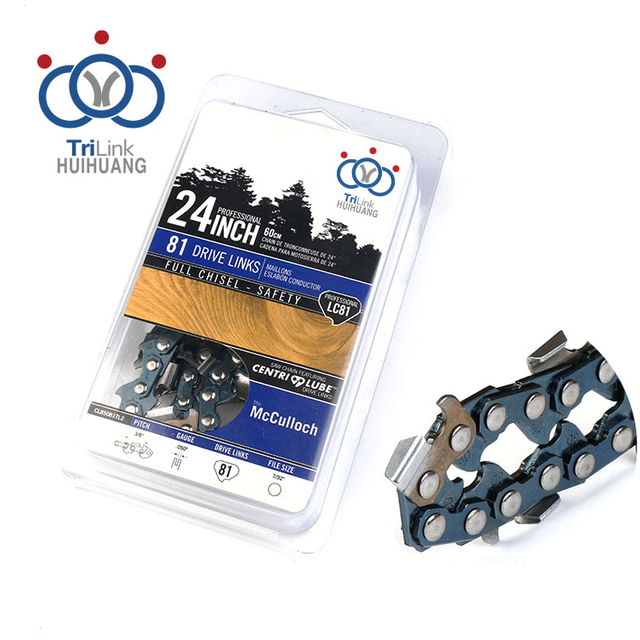
| Drive Link Count | Number of drive links in the chain loop | Determines the correct loop length for the bar and saw setup |
Common chainsaw chain pitch options include 3/8" low profile, .325", 3/8", and .404". Availability varies by chain model and manufacturer.
Always check your chainsaw and guide bar specifications before selecting a replacement chain.
If you frequently cut clean timber and can maintain precise cutter geometry, full chisel chains may provide greater cutting efficiency.
If you work in changing conditions or prefer a more forgiving cutter profile, semi chisel chains may be more practical.
Both types require regular sharpening, proper lubrication, correct chain tension, and inspection for damage.
Neither semi chisel nor full chisel cutter geometry alone determines whether a chainsaw chain is safe.
Kickback risk also depends on chain design, depth-gauge settings, guide bar configuration, saw compatibility, and operating technique.
Use only chains approved for your chainsaw and guide bar setup, follow the equipment manufacturer's instructions, and wear appropriate protective equipment.
There is no single chainsaw chain that performs best in every situation.
Choose a semi chisel chain if you regularly encounter dirty or abrasive wood, perform general-purpose cutting, or prioritize edge retention and easier maintenance.
Choose a full chisel chain if you primarily cut clean wood, require faster cutting performance, and are comfortable maintaining the chain's precise cutter geometry.
For distributors and professional buyers comparing saw chain options, TriLink Huihuang provides semi chisel and full chisel chains in different specifications.
Browse our Chainsaw Chain Product Range or contact our team for assistance with specifications and product inquiries.
Full chisel chains generally cut faster in clean wood, but semi chisel chains tend to retain their cutting edges better in dirty or abrasive conditions. The better choice depends on your application.
Full chisel chains are often preferred for fast cutting in clean hardwood. Semi chisel chains are also suitable for hardwood, especially when abrasive conditions or reduced sharpening frequency are important considerations.
Semi chisel chains generally offer better tolerance of dirt and abrasive materials. However, actual edge retention depends on chain quality, sharpening, wood conditions, and maintenance.
Not necessarily. Cutter shape alone does not determine kickback risk. Safe operation depends on the complete chain and guide bar design, correct maintenance, equipment compatibility, and operator technique.
In some cases, yes, provided the replacement chain has the correct pitch, gauge, and drive link count and is approved for the chainsaw and guide bar configuration. Always verify compatibility before making the change.
The choice between semi chisel and full chisel chainsaw chains comes down to cutting conditions and performance priorities. Semi chisel chains offer versatility and better tolerance of abrasive conditions, while full chisel chains provide faster cutting in clean wood.
Before selecting a chain, consider your wood type, cutting frequency, maintenance requirements, and chainsaw specifications.
For professional chainsaw chain sourcing, explore TriLink Huihuang's Saw Chain Products to compare available chain types and find suitable cutting solutions.