Views: 0 Author: Site Editor Publish Time: 2026-11-18 Origin: Site


Choosing the right 3/8 vs .325 chainsaw chain depends on your saw's specifications, cutting requirements, and the type of wood you work with. These two chain pitches differ in design and compatibility, which can affect cutting performance, chain speed, and maintenance needs. The selected chain must match the guide bar, drive sprocket, and manufacturer's recommendations. Understanding the differences in chain pitch, cutter design, and application can help you choose the right chain for your equipment and maintain consistent cutting performance.
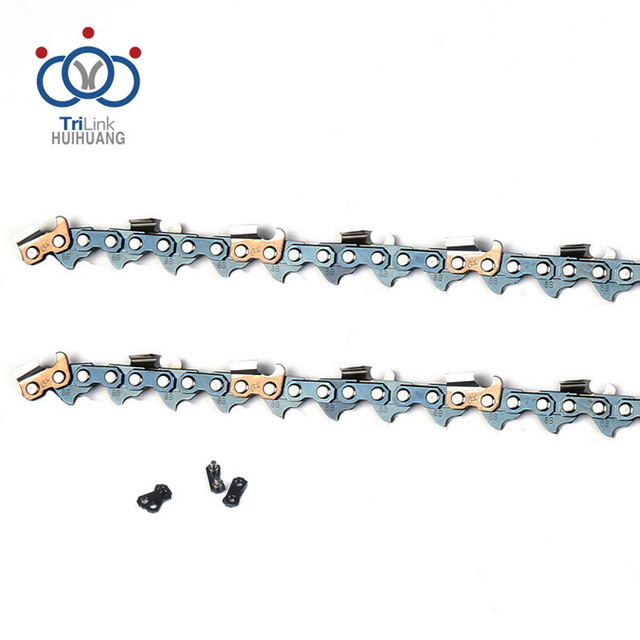
.325" Pitch Chains: Feature a narrower kerf and closer cutter spacing, delivering smoother cuts with less vibration. Optimal for mid-range saws (40cc–60cc).
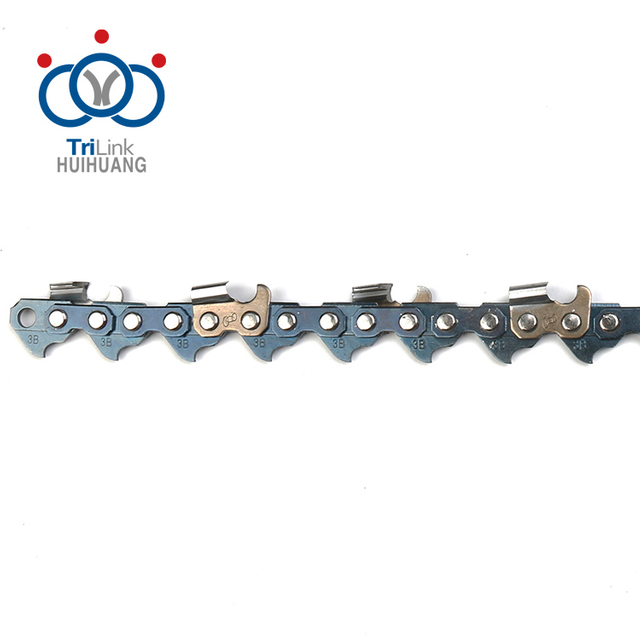
Standard 3/8" Pitch Chains: Feature larger cutters and a wider kerf, designed to clear more wood fiber per pass. Requires high torque and is standard for professional-grade saws (50cc–100cc+).
The Low-Profile Exception: 3/8" Low Profile (often called Picco) is a distinct category designed for entry-level, low-horsepower saws (under 40cc) and should not be confused with standard 3/8" chain.
System Compatibility: Switching between .325 and 3/8 pitches requires replacing the drive sprocket and guide bar to match the new pitch; they are not interchangeable on the same hardware.
Cutter Shape Matters: Both pitches are available in full-chisel (square-cornered for speed) and semi-chisel (rounded for durability in dirty wood), which heavily influences overall cutting performance.
Table of Contents
Defining pitch accurately prevents equipment mismatch. Many operators struggle with poor saw performance simply because they run a chain that demands more torque than their engine produces. Pitch is the foundational metric dictating the size, weight, and aggressive nature of the cutting attachment. Get this wrong, and you risk burning out your clutch, stretching your chain prematurely, or suffering severe kickback.
Chain pitch is calculated by measuring the distance between any three consecutive rivets and dividing that number by two. Chain pitch is an important specification that determines compatibility between the saw chain, drive sprocket, and guide bar nose sprocket. A larger pitch generally corresponds to a different chain design and component size, but cutter dimensions, chain weight, and cutting performance also depend on the specific chain series and cutter configuration. The required pitch should always follow the chainsaw and guide bar manufacturer's specifications. You can measure this in the shop using a standard set of digital calipers. Place the jaws across three rivet heads, take the reading in inches, and halve it.
The industry naming convention often causes confusion regarding the 3/8" measurement. While .325" is expressed as a decimal, 3/8" is expressed as a fraction. Mathematically, 3/8 equals 0.375. Manufacturers use the fraction to prevent operators from confusing 0.375 with 0.325 on packaging and guide bar stamps. This distinction stops costly purchasing errors at the supply store. When you look at the stamped numbers on the tail of your guide bar, you will clearly see either .325 or 3/8 etched into the steel.
You must differentiate between Standard 3/8" and 3/8" Low Profile. Standard 3/8 is a heavy-duty, professional-grade chain built for high-displacement engines. 3/8 Low Profile, sometimes called Picco, features a much smaller chassis and lighter cutters. 3/8 Low Profile, sometimes called Picco in STIHL's product range, features a smaller chain design commonly used on lightweight consumer chainsaws and other equipment specified for this chain type. Standard 3/8 chains are not interchangeable with 3/8 Low Profile chains, as they use different chain designs and require matching guide bars and drive sprockets. Always follow the chainsaw manufacturer's compatibility specifications. The remainder of this technical comparison focuses exclusively on the heavy-duty Standard 3/8 versus the mid-range .325.
The .325 pitch serves as the industry standard for mid-range, all-purpose chainsaws. It strikes an excellent balance between cutting speed and operator comfort. Because the cutters are physically smaller than those on a 3/8 chain, the engine does not work as hard to pull them through the wood. This makes the .325 an incredibly efficient choice for a wide variety of forestry tasks, especially when running guide bars between 16 and 20 inches.
A .325 chain features high cutter density. There are more teeth per inch of chain contacting the wood at any given moment. This density results in a smooth cutting action with minimal chatter. The .325 chain creates a narrower kerf width, removing less wood fiber per pass. Because you remove less material, the saw requires less engine torque to maintain high RPMs in the cut. High chain speed is what makes a 50cc saw feel fast and responsive in the hands of an experienced operator.
The .325 pitch is commonly used on a range of mid-size chainsaws, but its compatibility is not determined by engine displacement alone. Different manufacturers offer .325 configurations for different saw models and cutting applications. Before selecting this chain, check the recommended pitch, guide bar specifications, and drive sprocket compatibility in the equipment manual. Engine power, chain condition, cutter design, and cutting technique also influence overall performance.
The best applications for the .325 pitch include firewood processing, limbing felled trees, and dropping small-to-medium diameter timber. It is the ideal configuration for users who prioritize reduced vibration and lower kickback risk over raw cutting speed in massive logs. When you spend eight hours a day limbing branches, the smooth operation of a .325 chain drastically reduces operator fatigue in your hands and forearms.
To verify if your current setup is optimized for a .325 chain, follow these field checks:
Check the powerhead displacement tag to confirm it falls between 40cc and 60cc.
Inspect the guide bar length. .325 performs best on bars ranging from 16 to 20 inches.
Check the drive sprocket specifications to confirm that its pitch matches the .325 chain. Also verify that the sprocket type and mounting configuration are compatible with your chainsaw model.
Examine the wood chips. A properly filed .325 chain produces uniform, medium-sized chips rather than fine dust or massive chunks.
The standard 3/8 pitch stands as the heavy-duty choice for high-production forestry and large timber operations. It withstands immense mechanical stress. When professional loggers step into the woods to fell massive hardwoods, they rely on the rugged architecture of the 3/8 chain. It prioritizes aggressive material removal above all else and pairs perfectly with guide bars ranging from 24 inches up to 36 inches or more.
The performance profile of a standard 3/8 chain is defined by its larger cutters and wider kerf. These large teeth take aggressive, deep bites out of hard, dense wood. Because the pitch is larger, there are fewer teeth per inch compared to a .325 chain. This increased spacing dramatically improves the chain's clearing capacity. It allows massive wood chips to evacuate the cut quickly without clogging. Pulling these large cutters through solid oak or hickory requires substantial torque to prevent the chain from stalling in the kerf.
Standard 3/8 pitch chains are commonly used in professional forestry and heavy-duty cutting applications. Their suitability depends on the chainsaw manufacturer's recommended chain configuration, engine performance, guide bar specifications, and intended workload. When evaluating a 3/8 chain, consider the saw's power output, compatible drive sprocket, and cutting requirements rather than relying on engine displacement alone.
The best applications for standard 3/8 pitch include heavy felling, bucking large-diameter hardwoods, and professional arboriculture. It excels in situations where clearing speed in thick wood far outweighs the need for a smooth, low-vibration cut. When you bury a 32-inch guide bar into a solid trunk, you need the chip-clearing capacity and sheer structural strength that only a standard 3/8 chain provides.
Wood Type & Condition | .325 Pitch Performance | Standard 3/8 Pitch Performance |
|---|---|---|
Small Pine / Softwood (Under 16") | Excellent. High RPMs slice through quickly. | Overkill. Rougher cut, unnecessary weight. |
Green Oak / Hardwood (16" - 24") | Good. Requires sharp cutters to maintain speed. | Excellent. Clears heavy, wet chips efficiently. |
Massive Hardwood Trunks (24"+) | Poor. Kerf clogs with chips, saw bogs down. | Optimal. Deep bites and wide kerf prevent binding. |
Dirty or Frozen Timber | Good (if semi-chisel). Less grabby in hard knots. | Fair. Aggressive cutters dull faster if they hit dirt. |

Evaluating these two pitches requires looking beyond basic dimensions. We analyze how their physical features translate into real-world cutting outcomes. The interaction between engine displacement, bar length, and chain pitch dictates the efficiency of your daily operations. Understanding these dynamics helps you configure your equipment for maximum productivity on the landing or in the woods.
Cutting speed and efficiency vary wildly depending on the timber size. The .325 pitch excels in smaller wood because its narrow kerf allows mid-range saws to maintain peak RPMs. High chain speed translates to faster cuts in limbs and small trunks. The 3/8 pitch dominates large wood. Its massive cutters remove maximum material per pass without clogging the kerf with sawdust. In a 30-inch log, a .325 chain struggles to clear the chips, while a 3/8 chain pulls them out effortlessly.
Smoothness and kickback risk are critical safety factors. The .325 offers a remarkably smoother plunge cut. Because the cutters are smaller and closer together, the chain chatters less when entering the wood nose-first. This translates to lower overall kickback energy. The standard 3/8 chain is far more prone to grabbing. Its aggressive bite requires advanced operator control, a firm grip, and a deep understanding of reactive forces to operate safely. If you hit a hidden knot with the upper quadrant of a 3/8 bar nose, the saw will violently throw itself back at you.
Tooth geometry interacts heavily with pitch. Both pitches are available in full-chisel and semi-chisel profiles. A 3/8 full-chisel chain features square-cornered teeth, offering maximum speed in clean, green timber. It dulls rapidly if it touches dirt or rocks. A .325 semi-chisel chain uses rounded corners. This provides a highly forgiving, durable cut in dirty, dry, or frozen wood. Matching the cutter profile to your environment is just as important as selecting the right pitch.
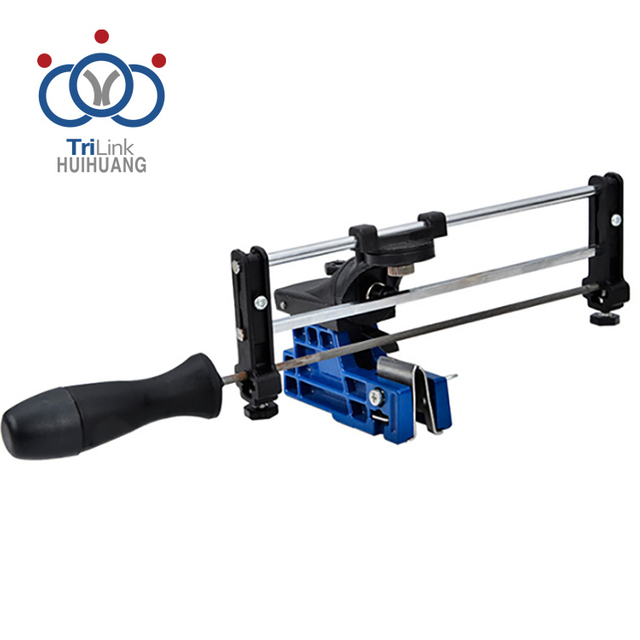
Proper sharpening requires a round file that matches the specific chain model and cutter design. Some common .325 chains use a 3/16" (4.8 mm) file, while standard 3/8 chains may use a 7/32" (5.5 mm) or 13/64" (5.2 mm) file, depending on the manufacturer. Always check the chain manufacturer's sharpening specifications and use the recommended filing guide to maintain the correct cutter geometry.
Depth gauge, or raker, tuning is another critical maintenance aspect. The standard raker depth for most chains is 0.025". Using 2-in-1 filing guides lowers rakers perfectly to spec. Lowering the rakers manually with a flat file increases the bite size. This increases cutting speed but demands significantly more engine torque. Dropping rakers too low on a 3/8 chain drastically increases kickback risk and vibration compared to doing the same on a .325 chain. A 3/8 chain with filed-down rakers will violently shake the saw and stall the engine in hard wood.
Durability and component wear factor heavily into your maintenance schedule. The heavier weight of a standard 3/8 chain places more physical stress on the guide bar rails and the drive sprocket. Over hundreds of hours, the aggressive nature of the 3/8 chain wears down your bar grooves faster than the smoother-running .325 chain. Regular lubrication and proper chain tension are vital to extending the life of these components. A loose 3/8 chain will quickly peen the edges of your bar rails, requiring you to dress the bar with a flat file constantly.
Symptom | Likely Cause (.325 Setup) | Likely Cause (3/8 Setup) |
|---|---|---|
Engine Bogs in Cut | Rakers filed too low for a 40cc saw. | Saw lacks the 60cc+ displacement needed. |
Chain Chatters Violently | Dull cutters or loose chain tension. | Aggressive full-chisel profile hitting hard knots. |
Fine Sawdust Instead of Chips | Top plate angle is blunt; needs 3/16" filing. | Cutters are rocked out; needs 7/32" filing. |
Bar Rails Wearing Unevenly | Cutting with a dull chain, forcing the saw. | Heavy chain weight combined with poor oiling. |

Making the final decision requires balancing your saw's mechanical capabilities with your daily cutting environment. You evaluate the trade-offs between speed, smoothness, and torque requirements. A poorly configured saw wastes fuel, damages timber, and exhausts the operator. By applying a structured decision framework, you can select the optimal chainsaw chain for your specific needs.
The primary value influencing factor is the displacement rule. This is a hard mechanical boundary. If your saw is under 50cc, .325 is the mandatory choice to prevent engine bogging. Small engines cannot pull large 3/8 cutters through wood efficiently. If your saw is over 60cc, standard 3/8 is required to fully utilize the engine's torque. Running a .325 chain on a 70cc saw wastes the powerhead's potential and risks breaking the lighter chain chassis under heavy throttle.
The 50cc to 60cc range represents a gray area where both pitches operate effectively. The decision comes down to the wood type and the specific task. Choose the .325 pitch for limbing operations and cutting softwoods like pine. The higher RPMs slice through branches quickly. Choose the 3/8 pitch if you spend your days bucking dense hardwoods like oak or maple, where chip clearance is paramount. Many professional arborists keep a 50cc saw with a .325 chain for canopy work and a 70cc saw with a 3/8 chain for trunk removal.
You cannot simply buy a 3/8 chain and mount it on a saw configured for .325. The drive links will not seat into the sprocket, and the chain will not align with the guide bar nose. Attempting to force this mismatch instantly destroys your equipment. The drive links will chew up the sprocket splines, and the chain will derail from the bar the moment you pull the throttle.
Converting pitch requires specific hardware modifications. You must purchase a new guide bar with a matching nose sprocket designed for the new pitch. You must replace the drive sprocket or rim on the powerhead. Both the bar and the sprocket must match the pitch of the new chain perfectly. To perform this conversion, remove the clutch cover, block the piston, spin off the clutch assembly, and slide the old rim sprocket off the splined shaft. Slide the new pitch-matched rim onto the splines, reinstall the clutch, and mount your new guide bar.
Verify your saw's exact CC rating in the owner's manual to determine its optimal torque band before buying a new chain.
Check the stamped numbers near the mounting pad of your current guide bar to confirm your existing pitch and gauge.
Inspect your drive sprocket for wear; if you are changing pitches, order a matching rim or spur sprocket immediately.
Ensure you have the correct file size (3/16" for .325 or 7/32" for standard 3/8) in your tool kit to maintain the new chain.
A: Not directly. You must change the drive sprocket and the guide bar to match the 3/8 pitch. The drive links of a 3/8 chain will not fit into a .325 sprocket. Furthermore, your saw must have enough engine displacement (ideally 50cc or more) to pull the larger 3/8 cutters without bogging down in the wood.
A: It depends on the wood size and the saw's power. A .325 cuts faster in smaller wood and limbs due to a narrower kerf that maintains high engine RPMs. A 3/8 cuts faster in large logs when powered by a high-CC engine, as its larger cutters remove more material per pass without clogging.
A: The .325 chains generally require a 3/16" (4.8mm) file. Standard 3/8 chains typically use a 7/32" (5.5mm) or 13/64" (5.2mm) file, depending on the brand. 3/8 Low Profile uses a 5/32" (4.0mm) file. Maintaining the exact file size is critical for preserving top-cutting performance and edge geometry.
A: Both 3/8 and .325 chains are available in different cutter profiles. Full chisel features square corners designed for maximum cutting speed in clean, green wood. Semi-chisel (or chipper) features rounded corners that cut slightly slower but stay sharp much longer in dirty, abrasive, or frozen forest conditions.
A: No. While they share the exact same rivet spacing (pitch), they are entirely different chains. Low Profile (Picco) has much smaller cutters, a narrower chassis, and lighter drive links. It is designed specifically for low-power, consumer-grade saws under 40cc, whereas standard 3/8 is for heavy-duty professional saws.
A: Professionals typically operate high-displacement saws (70cc+) that generate massive torque. The standard 3/8 chain features larger, thicker cutters and a heavier chassis that can handle this extreme power. It clears large wood chips quickly in massive timber without breaking, stretching prematurely, or stalling the powerhead.
A: While the pitch measurements (3/8 and .325) are strictly standardized across the entire industry, the actual performance varies by manufacturer. Cutter design, metal hardness, chrome plating thickness, and out-of-the-box sharpness differ significantly between top brands. However, a .325 from one brand will still fit a .325 sprocket from another.