Views: 0 Author: Site Editor Publish Time: 2026-01-12 Origin: Site


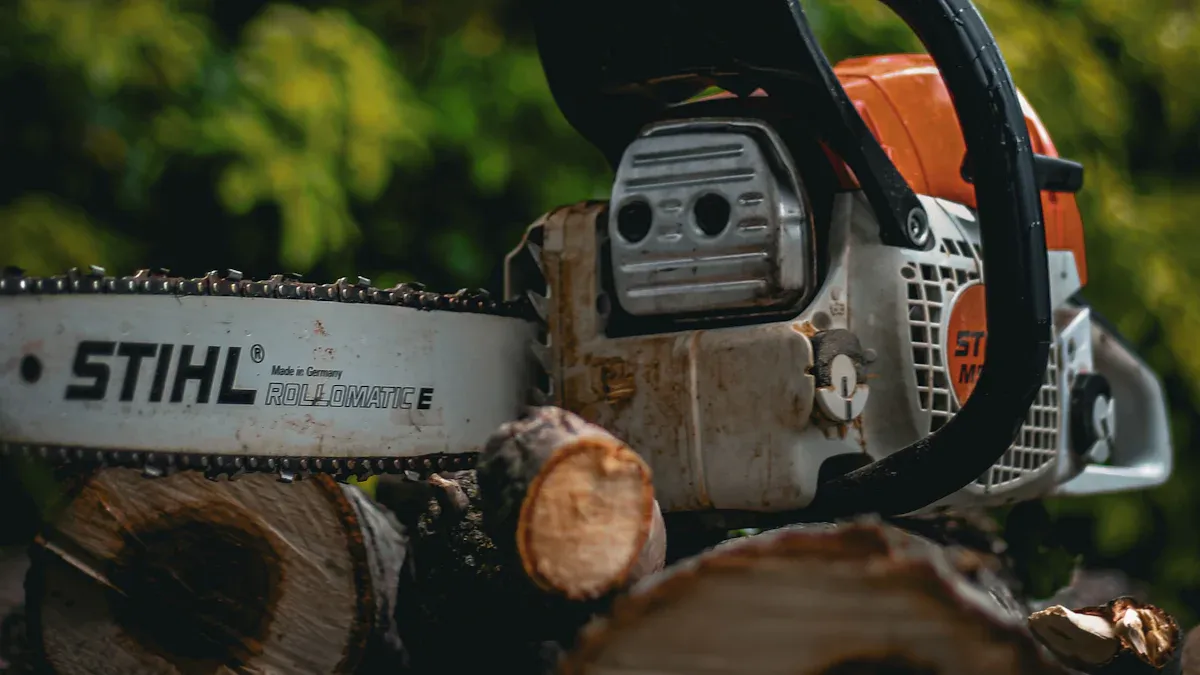
When you use a chainsaw, you need to know What size chain is a saw chain? Saw chain size means three main things: pitch, gauge, and drive links. Each one helps you find the right fit for your chainsaw. Using the correct chain size keeps your chainsaw safe and working well. TRILINK HUIHUANG Saw Chain gives you strong performance and reliability. Whether you use your chainsaw for big jobs or small tasks at home, understanding chain size helps you get the best results.
Understand the three key measurements of saw chains: pitch, gauge, and drive links. These determine the right fit for your chainsaw.
Using the correct chain size improves cutting speed and efficiency. It also helps keep your chainsaw safe from damage.
Always check your chainsaw's manual for the right chain specifications. This ensures you select the best chain for your tool.
Choose the right chain type based on your cutting tasks. Different chains work better for hardwoods, softwoods, and safety needs.
Regular maintenance of your chainsaw and chain helps them last longer and perform better. Keep your chain sharp and well-oiled.
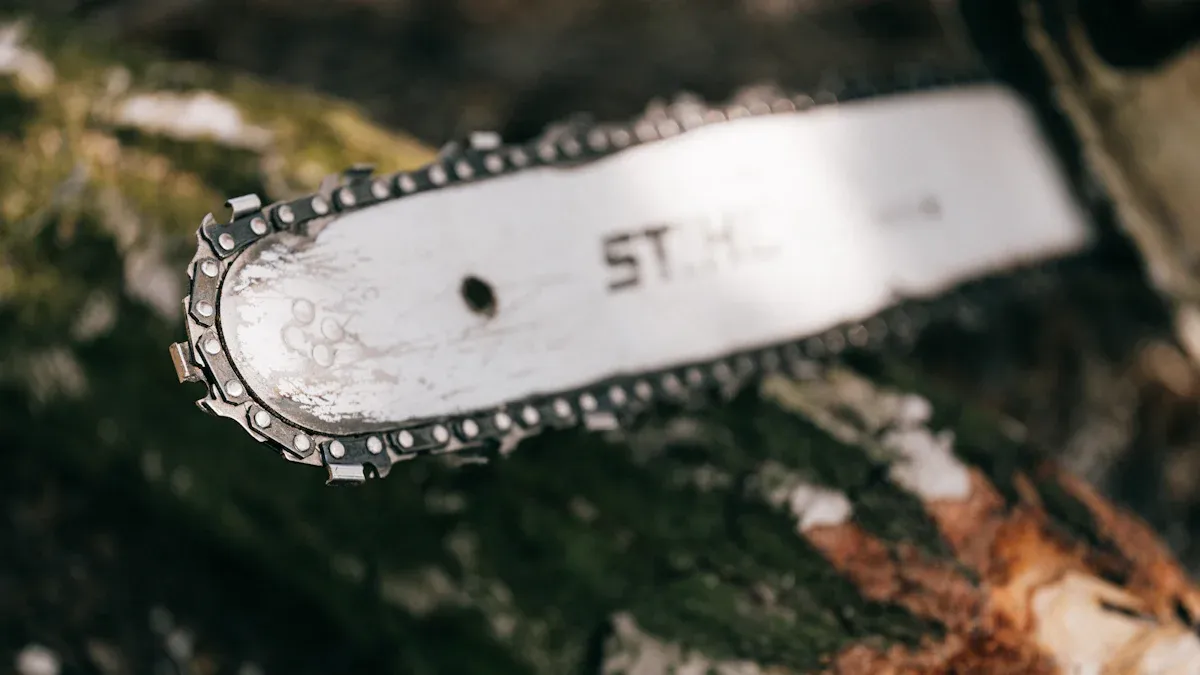
When you ask, what size chain is a saw chain?, you need to look at three main measurements: pitch, gauge, and drive links. Each measurement helps you find the right fit for your chainsaw. If you want your chainsaw to work well and safely, you must understand these terms.
Here is a simple table to help you see what each measurement means and how you can check it:
| Feature | Definition | Measurement Method | Common Sizes |
|---|---|---|---|
| Chain Pitch | Distance between centers of three consecutive rivets, divided by two. | Measure distance between three rivets and divide by two. | 3/4" (0.95 cm), .325" (0.83 cm), 1/4" (0.63 cm) |
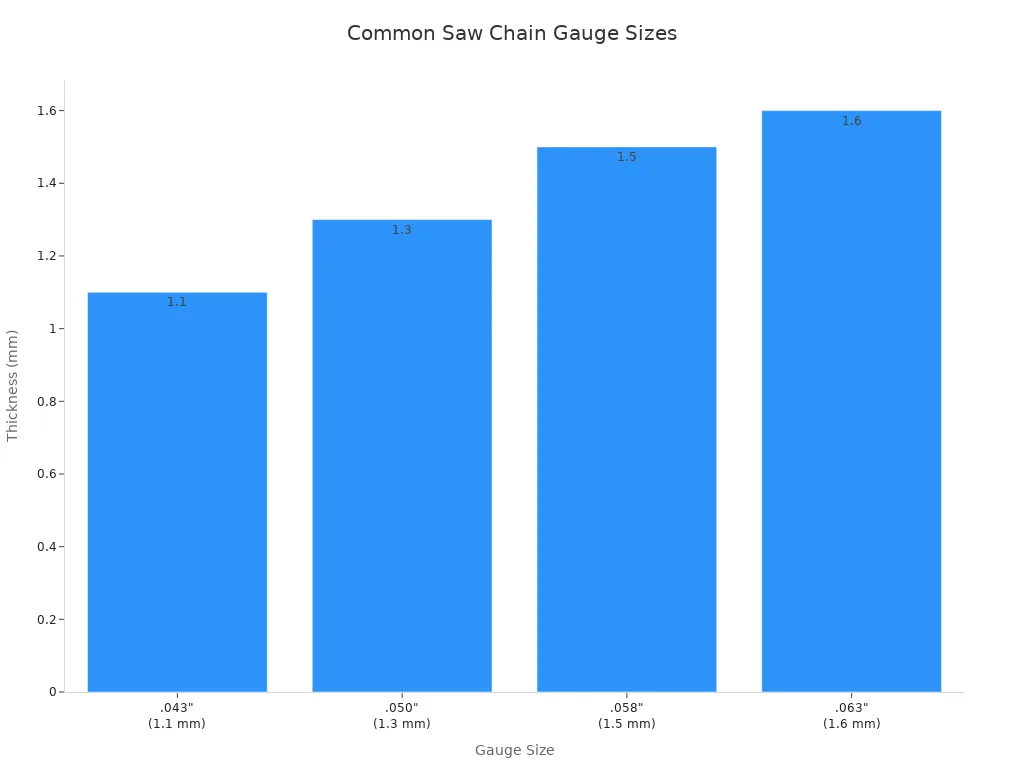
| Chain Gauge | Thickness of the chain that fits into the guide bar groove. | Use a caliper to measure thickness or a Go/No-Go gauge for fitting. | .043" (1.1 mm), .050" (1.3 mm), .058" (1.5 mm), .063" (1.6 mm) |
| Drive Links | Number of links that determine the length of the chainsaw bar. | Count each individual drive link while keeping the chain flat. | N/A |
Tip: Always count the drive links on your old chain before buying a new one. This helps you get the right length for your chainsaw bar.
Pitch tells you the distance between the drive lugs on the chain. This measurement must match the sprocket on your chainsaw. Common pitches include .325", 3/8", and .404". Gauge shows the thickness of the drive lugs. The gauge must fit the groove in your guide bar. The most common gauges are .050" and .058". Drive links are the teeth that fit into the guide bar. The number of drive links must match your guide bar length.
You can see the most common gauge sizes in this chart:
When you choose a TRILINK HUIHUANG Saw Chain, you get a product that uses precise measurements for pitch, gauge, and drive links. This makes it easy to match the chain to your chainsaw size and guide bar length. You can trust that each chain fits well and works smoothly.
You might wonder, what size chain is a saw chain? The answer matters because the right size chain helps your chainsaw work at its best. If you use the wrong size, you can have problems with cutting speed, safety, and even damage to your chainsaw.
Here are some ways chain size affects performance:
Pitch affects how fast and smooth your chainsaw cuts. A larger pitch can give you faster cutting, but it needs more power.
Gauge impacts the strength and stability of the chain. A thicker gauge can handle more power and longer bars.
The number of drive links must match your guide bar length. If you have too many or too few, the chain will not fit or work safely.
When you pick the right chain for your chainsaw size, you get better results. You cut wood faster and with less effort. You also keep your chainsaw safe from damage. The TRILINK HUIHUANG Saw Chain is made to fit many ideal chainsaw sizes. You can use it for different guide bar lengths and cutting jobs.
If you want to know what size chain is a saw chain? always check your chainsaw size, guide bar length, and the number of drive links. This helps you find the best chain for your needs. The right chain size gives you a safer, faster, and easier cutting experience.
When you choose a chainsaw, you need to match the chain size to the bar length. The bar length tells you how big of a tree or branch you can cut. If you use a bar that is too short, you may need to use more force, which can make the job unsafe. A bar that is too long can be hard to control and may also cause safety problems. You should always pick a bar length that fits your chainsaw’s power and the type of work you plan to do.
Chainsaw bar length should match the power of your chainsaw.
The job you want to do helps decide the right chain size.
Short bars may need more effort and can be less safe.
Long bars can be heavy and harder to handle.
The engine size of your chainsaw also matters. A bigger engine can handle a longer bar and a larger chain. If you use a small engine with a big bar, your chainsaw may not cut well. For example, gas-powered chainsaws often use bars from 14 to 20 inches for yard work or even longer for heavy-duty jobs. Electric chainsaws usually use shorter bars, from 10 to 18 inches, for lighter tasks.
The number of drive links on your chain must match your chainsaw bar. If you use the wrong number, your chain will not fit right. This can cause problems like the chain coming off or wearing out too fast. Look at this table to see what can happen if the drive links do not fit:
| Consequence | Description |
|---|---|
| Excessive Play | Too much space can make the chain come off and cut less accurately. |
| Binding and Wear | A tight fit causes friction and wears out the chain and bar quickly. |
Proper fit also means matching the gauge and pitch. The gauge affects how the chain fits in the bar groove. The pitch helps the chain work with the sprocket. When you match all these parts, your chainsaw works better and stays safe.
Tip: Always count the drive links and check the gauge and pitch before buying a new chain. This helps you get the best fit for your chainsaw.
You will find several chainsaw types when you look for the right chain. Each type works best for a certain job and type of wood. The table below shows the main differences between full-chisel, semi-chisel, and low-profile chains:
| Chain Type | Characteristics | Applications |
|---|---|---|
| Full Chisel | Square-cornered teeth cut fast. Needs frequent sharpening. Higher kickback risk. | Best for heavy-duty jobs like felling trees and cutting hardwoods. |
| Semi-Chisel | Rounded teeth last longer. Needs less sharpening. Good balance of speed and durability. | Great for firewood, pruning, and cutting softwoods. |
| Low-Profile | Smaller teeth. Less aggressive. Lower kickback. Quieter operation. | Ideal for homeowners who want safety for yard work and firewood. |
Tip: Choose a chain type that matches your skill level and the type of wood you plan to cut. Full-chisel chains cut fast but need more care. Semi-chisel chains work well for most firewood jobs. Low-profile chains help you stay safe if you are new to using a chainsaw.
The type of wood and the job you want to do will help you pick the best chain. Here is a quick guide to help you match the chain to your cutting task:
| Wood Type / Condition | Recommended Cutter Type | Suggested Upgrade |
|---|---|---|
| Clean hardwood (oak, maple) | Full chisel or square ground | Carbide chisel |
| Softwoods (pine, fir) | Semi-chisel | Chamfer carbide |
| Frozen or wet wood | Semi-chisel or carbide flat | Flat-ground carbide |
| Dirty wood (mud, sand) | Chamfer or Terminator | Dragon or custom grind |
| Nail-embedded wood | Chamfer carbide | Terminator or Dragon |
| High-volume cutting | Square ground or carbide | Carbide chisel |
You should use a full-chisel chain for cutting hardwoods and felling trees. This chain type gives you fast cuts but needs more sharpening. For firewood and cutting softwoods, a semi-chisel chain works best. It stays sharp longer and handles tough conditions. If you cut firewood at home and want extra safety, pick a low-profile chain.
TRILINK HUIHUANG Saw Chain stands out because it works well with many chainsaw types and cutting tasks. You can use it for firewood, yard work, or even heavy-duty jobs. The chain keeps its sharpness and gives you smooth cuts, no matter the type of wood. You get the same level of performance as other top brands, but with the added benefit of long-lasting sharpness and reliability.
Remember: Always match your chain to your chainsaw and the type of wood you plan to cut. This helps you work safely and get the best results.
Using the right saw chain size helps your chainsaw cut faster. The chain should match your chainsaw and guide bar. This makes cutting wood easier and smoother. You use less energy when the chain fits well. If the chain is too big or too small, cutting gets harder. You waste time and effort. A sharp chain that fits right cuts hardwood and softwood easily. It also keeps your chainsaw strong and safe from damage.
Tip: Always check the pitch, gauge, and drive links on your chain before you start cutting. This helps you get the best results every time.
The wrong chain size can make using a chainsaw dangerous. Kickback can happen if the chain does not fit. Kickback means the chainsaw jumps up fast. This can hurt you. Some things make kickback worse:
Bigger guide bar noses make the danger area larger.
Hitting objects can make the chainsaw move up quickly.
Longer bars give more force, so kickback is stronger.
Wide nose bars have bigger danger zones than narrow ones.
Picking the right chain size helps you stay safe. It also lets you control your chainsaw better.
The right chain size makes caring for your chainsaw easier. It helps your chainsaw and chain last longer. If you use the wrong size, you may sharpen the chain wrong. This makes cutting harder and wears out the chain faster. You want your chain to stay sharp for long jobs. Sharpening with the right file size helps your chainsaw cut better. It also lowers kickback risk and keeps your chainsaw working well.
Here is a table that shows why saw chains fail:
| Reason for Failure | Description |
|---|---|
| Improper tension | Causes more problems with the bar and chain than anything else. |
| Dull chains | Needs more work, which tires you and wears out the chain. |
| Incorrect filing techniques | Makes the chainsaw work poorly. |
| Lack of lubrication | Wears out and damages the chain. |
| Loose chain tension | Raises the chance of kickback and chain breaking. |
| Incorrect depth gauge settings | Hurts how the saw works and its safety. |
| Improperly installed chain parts | Can make the chainsaw fail while working. |
| Loose rivets or cracks | Can break the chain during use. |
Taking care of your chainsaw and using the right chain size helps you avoid these problems. You get better cutting, safer use, and your chainsaw lasts longer.
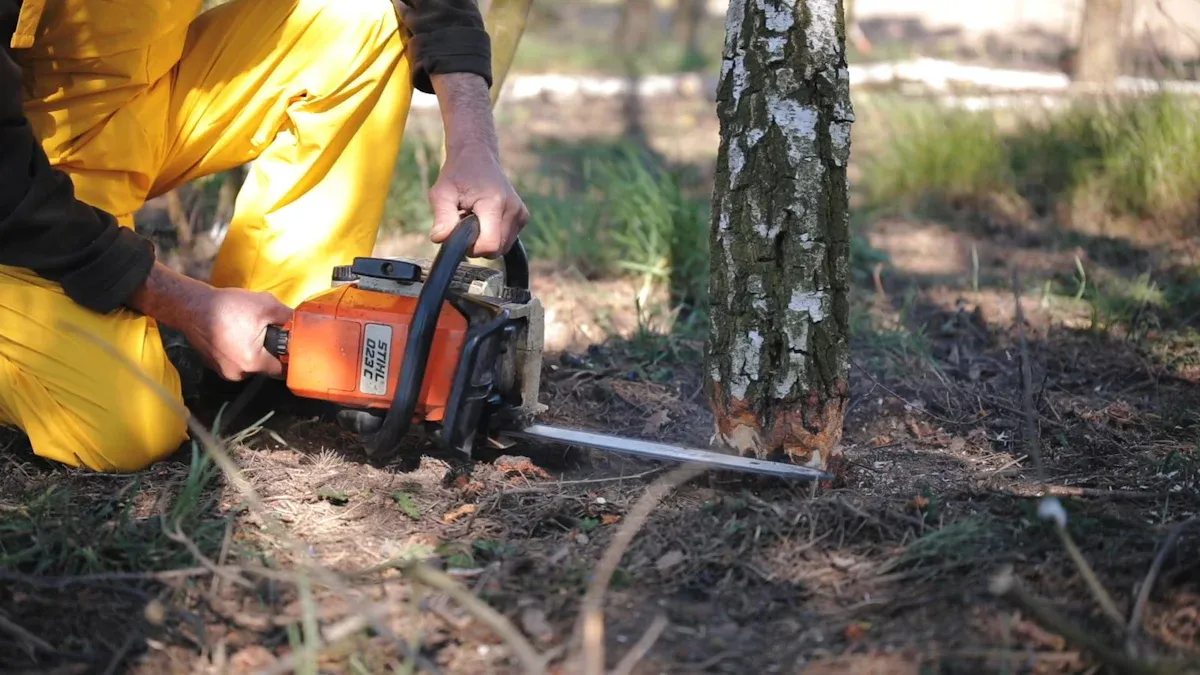
You want your chainsaw to work safely and efficiently. To do this, you need to measure and select the right chainsaw chain. Start by removing the chain from the bar. Lay it flat on a table. Mark a starting drive link with chalk. Count each drive link until you return to your mark. This gives you the total drive link count.
Next, check the pitch. Use a ruler to measure the distance across three rivets, then divide by two. For the gauge, look for markings on your chainsaw bar near the mounting end. You can also use a caliper or a Go/No-Go gauge to measure the thickness of a drive link. Fit a drive link into the bar groove to check for snugness.
Here is a table of helpful tools for measuring your chain:
| Tool/Device | Purpose | Method of Use |
|---|---|---|
| Tape Measure | Measure chain and bar length | Lay chain flat and measure total length |
| Ruler | Measure pitch | Count three rivets, divide distance by two |
| Caliper | Measure gauge and pitch accurately | Measure thickness of drive link or distance between rivets |
| Go/No-Go Gauge | Check gauge fit | Slide chain link through gauge for correct fit |
You should always check your chainsaw bar for markings that show pitch, gauge, and drive link count. Read your owner’s manual for a list of compatible chains. Many brands offer online tools to help with chainsaw selection. Bring your old chain to a shop if you need help.
Tip: Always match your chain to your chainsaw’s bar and engine size. This helps you select the best chainsaw for your needs.
If you want the right chainsaw for any job, choose a chain that fits your bar and matches your cutting tasks. TRILINK HUIHUANG Saw Chain offers reliable performance for both professionals and homeowners. You get a chain that fits well, lasts long, and keeps your chainsaw running smoothly. Good chainsaw selection means safer, faster, and easier work every time.
Understanding saw chain size helps you use your chainsaw safely and efficiently. You need to match pitch, gauge, and length to your chainsaw for the best results. When you choose the right chain, you cut faster and reduce the risk of injury. You also make your chainsaw last longer. TRILINK HUIHUANG Saw Chain gives you reliable performance for all your tree cutting needs. If you use your chainsaw often, investing in a high-quality chain means less downtime and better cutting every time.
Always check your chainsaw manual before buying a new chain.
The right chain improves safety and cutting speed.
A well-matched chainsaw chain keeps you working safely and helps you get the job done right.
You should check your chainsaw bar for pitch, gauge, and drive link count. You can also read your owner’s manual. These details help you pick the right chain for your tool.
No, you cannot use any saw chain on any chainsaw. The chain must match the bar’s pitch, gauge, and drive link number. Using the wrong chain can cause safety problems.
Replace your saw chain when it becomes hard to sharpen, shows cracks, or loses cutting power. If you see broken teeth or the chain stretches too much, you should get a new one.
Keep your chain sharp, clean, and well-oiled. Check the tension before each use. Store your chainsaw in a dry place. Regular care helps your chain last longer and work better.
A loose chain, worn bar, or wrong drive link count can cause this problem. Always check the fit and tension. Make sure you use the correct chain for your chainsaw.