
Views: 0 Author: Site Editor Publish Time: 2026-01-12 Origin: Site


Choosing the right chainsaw chain can make a world of difference in your cutting tasks. Full chisel and semi-chisel chains each have their unique advantages. But how do you know which one is the best for your needs?
In this article, we will explore the key differences between full chisel and semi-chisel chains. You’ll learn how each type impacts performance, durability, and maintenance.
A chainsaw chain is made up of several parts that work together to cut through wood effectively. Understanding how these components interact with the material you’re cutting is crucial to selecting the best chain for the job.
A chainsaw chain consists of:
● Drive Links: These engage with the chainsaw’s guide bar, ensuring smooth movement.
● Cutting Teeth: The sharp edges that slice through the wood. Their design varies based on chain type.
● Tie Straps: These connect the cutting teeth and drive links, ensuring stability during operation.
The chainsaw chain is designed to provide the cutting power needed for various tasks. The type of chain and its design significantly affect the speed, precision, and safety of cutting operations.
Chainsaw chains come in different designs, each suited to specific tasks:
● Full Chisel Chains: Known for their aggressive, fast cutting ability. Best suited for clean wood.
● Semi-Chisel Chains: Feature rounded teeth, making them less aggressive but more durable. Great for dirty or rough conditions.
● Low-Profile Chains: Designed for safety, reducing kickback risk. Ideal for novice users and softwood cutting.
Full chisel chains are the go-to choice for professionals who need speed and efficiency. These chains feature square-cornered teeth that offer a more aggressive cutting style, making them perfect for tasks requiring quick and precise cuts.
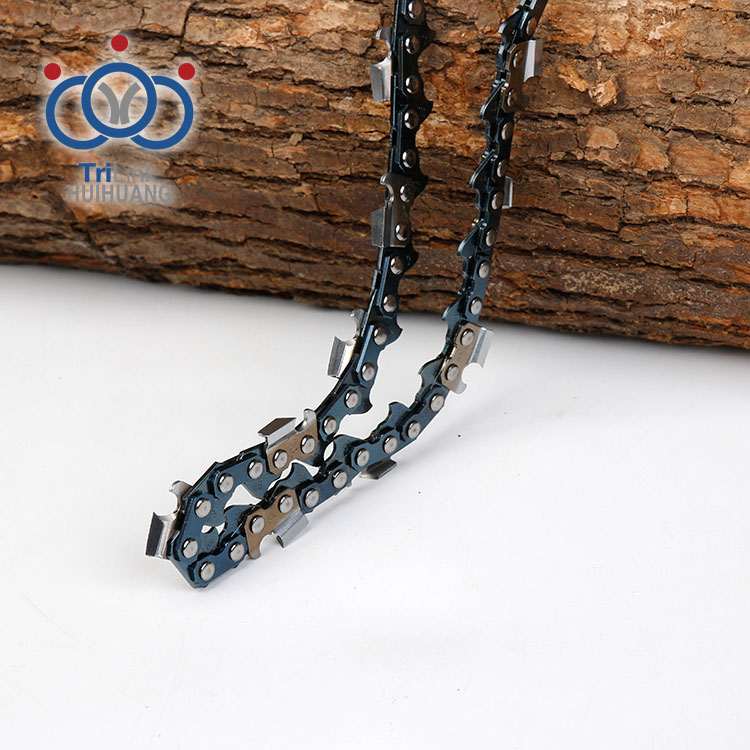
The full chisel chain uses sharp, square-cornered teeth that allow it to cut through wood quickly. These chains excel in tasks where speed is crucial, such as felling trees or cutting hardwood logs. Full chisel chains are designed for clean, smooth cuts, offering optimal performance when working with hardwoods or larger logs.
Key Advantages:
● Fast cutting speed: Cuts quickly, making it ideal for professionals with time-sensitive tasks.
● Aggressive cutting: The square-cornered teeth provide fast penetration into wood, reducing cutting time.
Key Disadvantages:
● Dulls quickly: Full chisel chains require frequent sharpening, especially when used on rough or dirty wood.
● Higher kickback risk: Due to the aggressive cutting profile, there's an increased risk of kickback, which requires extra caution.
If you need a chainsaw chain that lasts longer and performs well in dirty or rough conditions, a semi-chisel chain is the ideal choice. Its rounded teeth design makes it less aggressive but more forgiving in rough conditions.
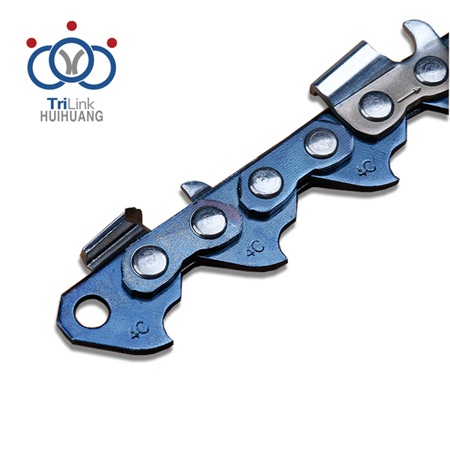
The semi-chisel chain features round-cornered teeth, which allow it to handle a wider variety of cutting conditions, including frozen, dirty, or abrasive wood. While it’s not as fast as a full chisel chain, it performs better in challenging environments and retains its sharpness longer.
Key Advantages:
● Durability: Semi-chisel chains maintain sharpness for longer, even when cutting through dirty or frozen wood.
● Lower kickback risk: The rounded teeth design reduces the likelihood of kickback, making it safer to use, especially for beginners.
Key Disadvantages:
● Slower cutting speed: Compared to full chisel chains, semi-chisel chains cut slower, which can be a disadvantage when speed is required.
● Less precision: The rounded teeth don't provide the same level of precision as square-cornered teeth.
Now that we understand the design and advantages of each chain type, let's compare them directly in terms of cutting speed, precision, and durability.
Factor | Full Chisel Chain | Semi-Chisel Chain |
Cutting Speed | Fast | Slower |
Precision | High | Moderate |
Aggressiveness | High | Low |
Full chisel chains are ideal for fast cutting, while semi-chisel chains offer better longevity but at the cost of cutting speed and precision.
Factor | Full Chisel Chain | Semi-Chisel Chain |
Durability | Dulls quickly | Retains sharpness longer |
Sharpening | Frequent | Less frequent |
Kickback Risk | High | Low |
Full chisel chains require more maintenance and pose a higher risk of kickback, whereas semi-chisel chains are safer and more durable in rough conditions.
Selecting the best chainsaw chain for your needs goes beyond just understanding the differences between full chisel and semi-chisel chains. The right choice depends on multiple factors, such as the tasks you’ll be performing, the type of wood you’ll be cutting, and how much maintenance you're willing to put into the chain. Let’s break down these considerations to help you make the best decision for your specific cutting conditions.
When choosing between full chisel and semi-chisel chains, the key difference often comes down to performance vs longevity. What matters most to you—cutting speed or durability?
● Performance: Full chisel chains are designed for speed and precision. They excel in tasks that require fast cutting, making them ideal for professional woodworkers, loggers, and arborists who prioritize productivity. If you need to cut large volumes of wood quickly, full chisel chains are the way to go.
● Maintenance: However, the high-speed cutting action comes at a cost. Full chisel chains tend to dull faster, requiring frequent sharpening. This makes them higher-maintenance and not ideal for users who want a "set it and forget it" tool. They also pose a higher kickback risk, requiring more caution, particularly for less experienced users.
● Ideal Use: Full chisel chains are perfect when time is of the essence, and you're working with clean wood that doesn’t have dirt, sand, or other abrasives.
● Longevity: Semi-chisel chains, while slower than full chisel chains, last longer due to their more durable round-cornered teeth. They are better suited to harsh conditions, such as cutting through dirty, frozen, or abrasive wood. If you prioritize longevity over speed, semi-chisel chains offer better value.
● Maintenance: These chains require less frequent sharpening, as they retain their sharpness longer. This makes them an excellent choice for users who need a chain that can handle extended use without constant maintenance.
● Ideal Use: Semi-chisel chains are great for situations where durability is key, such as cutting through dirty wood, frozen logs, or when safety is a top priority (since they reduce kickback risk).
Summary: If cutting speed and precision are more important than longevity and you're willing to put in the maintenance, full chisel chains are the best option. However, if you want a chain that can handle longer cutting sessions, is more durable, and performs well in rough conditions, semi-chisel chains are the ideal choice.
The type of wood you’ll be cutting plays a significant role in determining which chain is best suited for your task. Full chisel and semi-chisel chains have distinct advantages based on the wood type and cutting conditions.
● Full Chisel Chains for Hardwoods: Full chisel chains are particularly effective for cutting hardwoods. Their aggressive teeth provide fast, clean cuts in dense wood, making them the ideal choice for professionals working with tough, thick logs. Hardwoods like oak, maple, and hickory require a high-speed cutting action, which full chisel chains excel at.
● Semi-Chisel Chains for Both Softwood and Hardwood: While full chisel chains are ideal for hardwoods, semi-chisel chains offer versatility, performing well with both softwoods and hardwoods. Semi-chisel chains are slower than full chisel chains but still provide reliable cutting, even in tougher wood types. They’re a good middle ground for users who encounter a variety of wood types and want a chain that performs well in both softwood and hardwood conditions.
● Full Chisel Chains for Clean Wood: Full chisel chains thrive when cutting clean wood—meaning wood free of dirt, sand, or other abrasives. They’re perfect for professionals working in controlled environments, like sawmills, where clean logs are processed regularly. The speed of cutting through smooth, clean wood is unmatched with full chisel chains.
● Semi-Chisel Chains for Dirty or Frozen Wood: In rough conditions, such as cutting dirty wood (wood with dirt, sand, or grit), frozen logs, or wood with debris, semi-chisel chains are preferred. Their round-cornered teeth are better at handling these abrasive conditions without dulling quickly. Semi-chisel chains are also less sensitive to dirt and moisture, making them ideal for working in conditions where wood isn’t perfectly clean. Whether you’re cutting frozen wood in winter or dealing with dirty logs on a construction site, the semi-chisel chain is more durable and reliable.
Choosing between a full chisel and semi-chisel chainsaw chain depends on your cutting needs. Full chisel chains excel in speed and precision but require more maintenance. Semi-chisel chains offer better durability and safety, performing well in harsh conditions. When selecting, consider cutting speed, durability, and maintenance. Regular maintenance is essential to extend the life of your chainsaw chain. At ZHEJIANG TRILINK HUIHUANG CO. LTD., we offer high-quality chainsaw chains designed for optimal performance and durability, ensuring your tools stay in top condition.
A: Full chisel chains have square-cornered teeth for fast, aggressive cuts, while semi-chisel chains feature round-cornered teeth for more durability and better performance in rough conditions.
A: Full chisel chains are ideal for cutting hardwood due to their fast cutting speed and precision.
A: Full chisel chains dull quicker and require more frequent sharpening compared to semi-chisel chains, especially when cutting dirty or frozen wood.
A: Yes, semi-chisel chains are safer with lower kickback risk and easier to maintain, making them a great choice for beginners.
A: Consider cutting speed, durability, safety, and maintenance needs. Full chisel chains are faster, while semi-chisel chains offer better longevity and safety.
A: Yes, semi-chisel chains are more durable and work well with frozen or dirty wood, offering longer-lasting sharpness.