
Views: 0 Author: Site Editor Publish Time: 2026-04-20 Origin: Site


Chainsaw chains are integral to the performance and efficiency of a chainsaw, directly influencing how effectively it cuts through various materials such as wood, branches, and logs. These chains are designed with precision to ensure smooth, fast, and accurate cutting, making them indispensable for tasks ranging from felling large trees to pruning branches or performing detailed woodworking. The performance of a chainsaw is heavily dependent on the design and condition of the chain, as even small issues with the chain can lead to poor cuts and increased wear on the tool. Understanding the key parts of a chainsaw chain is essential for proper maintenance, as well as ensuring safety and optimal performance during use. In this article, we will explore the essential components of a chainsaw chain, including drive links, cutters, tie straps, depth gauges, and other important parts, examining their individual functions and how they work together to enhance cutting efficiency and prolong the life of your chainsaw.
A chainsaw chain is made up of several key components, each playing an essential role in ensuring the chain operates efficiently, safely, and effectively. Here are the main parts of a chainsaw chain:
· Drive links are the components that connect the chain to the sprocket, enabling the chain to move around the guide bar. These links are crucial for the chain’s movement and engagement with the chainsaw's motor power. They ensure that the chain rotates smoothly and maintains proper tension during operation.
· Cutters (or teeth) are the sharp edges of the chain that actually do the cutting. As the chain moves around the guide bar, the cutters bite into the wood, removing material and making the cut. The design and sharpness of the cutters directly impact cutting speed and efficiency, with different cutter types suited for various cutting tasks (e.g., full-chisel for fast cuts or semi-chisel for better durability).
· Tie straps are the parts that connect the cutters and the drive links, helping to maintain the structural integrity of the chain. They ensure the cutters are properly aligned with the rest of the chain, preventing misalignment or derailment during use. The tie straps are essential for maintaining the chain’s stability and performance over time.
· Depth gauges (also known as rakers) control the depth of the cut that the chain makes by regulating how deep the cutters dig into the material. They help ensure that the chain doesn't cut too aggressively, which could cause strain on the saw, or too shallowly, leading to inefficient cutting. Properly set depth gauges optimize cutting speed and efficiency.
· Sprocket teeth are located on the sprocket of the chainsaw, and they mesh with the drive links of the chain to propel it around the guide bar. These teeth play an essential role in transferring power from the motor to the chain, allowing the saw to cut through materials efficiently. Proper engagement between the sprocket teeth and drive links is vital for smooth operation.
· Rivets are small metal fasteners that hold the individual components of the chain together. They secure the drive links, tie straps, and cutters in place, allowing the chain to function as a cohesive unit. Rivets are critical for the overall integrity of the chain, ensuring that it stays together and operates smoothly during use.
In addition to the primary components of a chainsaw chain, there are several other key parts that contribute to the overall functionality, efficiency, and safety of the tool. Here are some additional components and their important roles:
· The bar link is a crucial part of the chain that connects the saw chain to the guide bar. It ensures proper alignment between the chain and the bar, allowing the chain to move smoothly around the bar during operation. Without the bar link, the chain could become misaligned, resulting in uneven cuts or potential damage to the chainsaw. It plays an essential role in keeping the chain securely in place, ensuring proper operation.
· The nose sprocket is located at the tip of the guide bar and plays an important role in chain movement. It works in conjunction with the sprocket teeth and helps guide the chain as it moves around the bar. The nose sprocket reduces friction between the chain and the bar, ensuring smooth operation and preventing wear at the tip of the bar. This component helps in maintaining chain speed and efficiency, especially during cuts that require maneuvering or turning.
· The tensioning pin is a small but critical part used to adjust the tension of the chainsaw chain. Proper tensioning is vital for smooth and safe operation, as it ensures the chain fits snugly around the guide bar without being too tight or too loose. A correctly tensioned chain reduces the risk of derailment and ensures efficient cutting. The tensioning pin allows for easy adjustments to the chain, maintaining optimal performance during use and extending the life of both the chain and the chainsaw.
These additional components, along with the main parts of the chainsaw chain, work together to ensure the chainsaw operates smoothly, safely, and efficiently, making each cut easier and more precise. Regular inspection and maintenance of these components are essential for preserving the overall performance and longevity of your chainsaw.
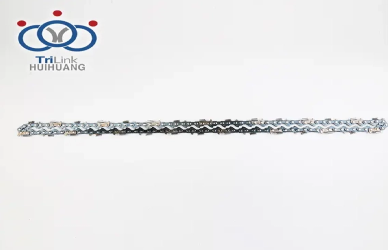
Each part of a chainsaw chain plays a crucial role in its overall performance, ensuring that the tool operates smoothly, efficiently, and safely. Here's how each component contributes to the cutting power, stability, and longevity of the chainsaw:
· Facilitate smooth movement of the chain around the guide bar: Drive links are essential for transferring power from the sprocket to the chain, enabling the chain to move smoothly around the guide bar. They ensure that the chain stays in place and operates without skipping or derailing, which allows for continuous and efficient cutting.
· Impact cutting efficiency and speed: The cutters (or teeth) are the sharp edges responsible for cutting through the material. The design and sharpness of the cutters determine how quickly and efficiently the chain can cut through wood. Aggressive cutters like full-chisel types cut faster, while semi-chisel types are better for durability, especially in tougher woods.
· Ensure the stability and shape of the chain: Tie straps hold the drive links and cutters together, ensuring the chain remains stable and in proper alignment. They prevent the chain from losing its shape, ensuring that it functions efficiently and maintains a consistent cutting performance over time.
· Control cutting depth and prevent over-digging: Depth gauges, or rakers, regulate how deeply the cutters dig into the material. Properly set depth gauges ensure that the cutters don't dig too deeply, which could cause excessive strain on the saw, or too shallowly, leading to inefficient cuts. They balance cutting speed and prevent over-digging, contributing to smoother, more controlled cuts.
· Drive the chain's movement by engaging with the drive links: Sprocket teeth are located on the sprocket, where they mesh with the drive links to propel the chain. They are crucial for transferring power from the motor to the chain, enabling the saw to cut through the material effectively. Proper engagement between sprocket teeth and drive links ensures that the chain moves smoothly and efficiently.
· Secure the chain's parts and maintain its structural integrity: Rivets are small but vital fasteners that hold all the components of the chain together. They ensure that the drive links, cutters, and tie straps remain securely connected, preventing the chain from falling apart during use. The structural integrity provided by rivets is critical for maintaining consistent cutting performance.
· Keeps the chain securely aligned with the guide bar, ensuring proper cutting: The bar link is responsible for connecting the chain to the guide bar, ensuring proper alignment and movement. It helps the chain stay in place and move smoothly along the bar, ensuring accurate and efficient cutting with minimal risk of misalignment.
· Reduces friction at the tip of the bar and helps guide the chain effectively: The nose sprocket, located at the tip of the guide bar, helps reduce friction and allows the chain to move smoothly around the bar's end. It also helps guide the chain as it turns during cutting, ensuring that the saw operates efficiently and that cuts are clean and precise, particularly when making curved or angled cuts.
· Helps adjust the chain’s tightness, preventing it from being too loose or tight, thus ensuring smoother operation: The tensioning pin allows for easy adjustment of the chain's tightness. Proper tension is critical for smooth operation—if the chain is too loose, it can derail, while if it's too tight, it can cause excess strain on both the chain and the chainsaw motor. Proper tension ensures efficient cutting and reduces wear on both the chain and the saw.
Selecting the right chainsaw chain is essential for achieving optimal performance and ensuring safe, efficient cutting. The right chain not only improves cutting speed but also reduces wear on the chainsaw, prolonging its life. Here are key factors to consider when choosing the appropriate chain for your task:
· Pitch: The pitch refers to the distance between drive links, and it plays a critical role in determining the cutting efficiency and compatibility with the guide bar and sprocket. A smaller pitch (e.g., 3/8") is ideal for lighter tasks and smaller chainsaws, while a larger pitch (e.g., .404") is better suited for heavy-duty cutting, such as cutting through thick hardwood.
· Gauge: The gauge is the width of the drive link that fits into the groove of the guide bar. A chain with the correct gauge ensures a proper fit and smooth operation. A smaller gauge (e.g., .050") is used for lighter chainsaws, while a wider gauge (e.g., .058" or .063") is typically used for professional or heavy-duty chainsaws.
· Chain Type: Different chain types are designed for specific cutting tasks. Full-chisel chains are perfect for fast cutting through softwoods, while semi-chisel chains provide a balance between cutting speed and durability, making them ideal for tougher, more abrasive woods. Low-profile chains are suitable for light-duty use, offering a smoother, safer cutting experience.
· It’s crucial to select a chain that matches the size of your chainsaw's guide bar. The length of the guide bar determines the number of drive links required for the chain. Using a chain that’s too short or too long for the bar will affect the chain's movement and cutting efficiency, leading to poor performance or damage to the chainsaw. Make sure to check the guide bar's length and choose a chain that fits properly for safe, effective cutting.
The bar link connects the chain to the guide bar, ensuring proper alignment and smooth chain movement around the bar.
The nose sprocket reduces friction at the tip of the guide bar and helps guide the chain smoothly, ensuring efficient operation.
The tensioning pin is used to adjust the chain’s tightness, ensuring it isn’t too loose or tight for smooth operation.
Regular maintenance, including cleaning, lubrication, sharpening, and proper tensioning, helps prevent wear and tear and prolongs the chain’s life.
Understanding the anatomy of a chainsaw chain is essential for ensuring proper operation, performance, and safety. Each component, from the drive links to the cutters, depth gauges, and tie straps, plays a critical role in the chain’s efficiency and durability. By selecting the right chain for your task and performing regular maintenance, you can enhance cutting performance, prevent wear and tear, and extend the life of your chainsaw. At ZHEJIANG TRILINK HUIHUANG CO. LTD., we emphasize the importance of choosing high-quality chains and components designed for durability and performance. Regular maintenance and correct part selection are key to achieving optimal chainsaw efficiency and ensuring safe, smooth operation for years to come.